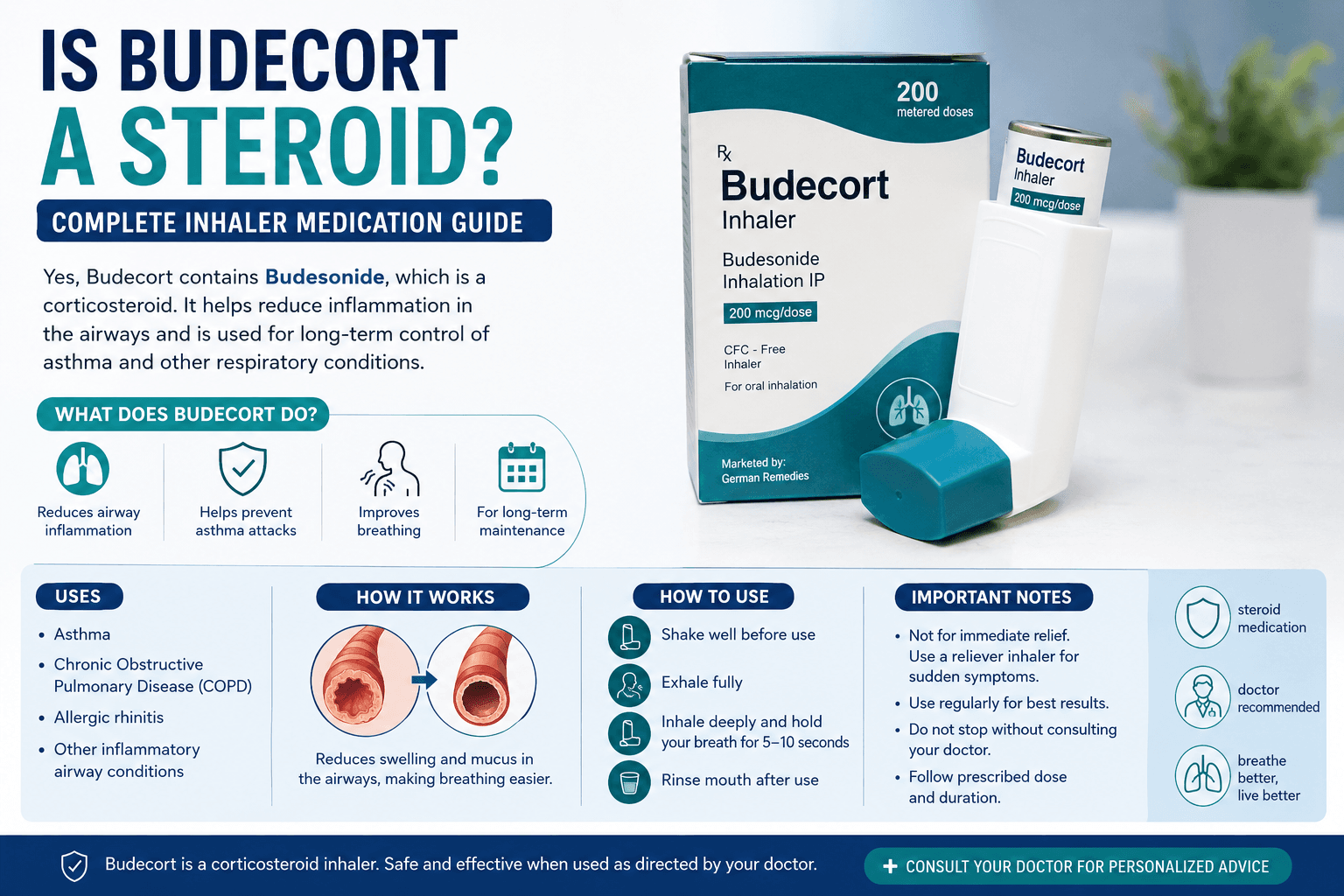
Is Budecort a Steroid? Complete Guide to Uses, Side Effects, Dosage & Safety
By Artemis_Strength•May 26, 2026•8 min read
Is Budecort a Steroid? Complete Guide to Uses, Side Effects, Dosage & Safety
Medical Disclaimer: This article is for educational and informational purposes only. It does not constitute medical advice, diagnosis, or treatment. Budecort is a prescription medication. Always consult your doctor or a qualified healthcare professional before using any medication, altering dosage, or making changes to your treatment plan. The information provided here is not a substitute for professional medical guidance.
Walk into any gym, and the word “steroid” immediately conjures images of syringes, muscle-bound physiques, and banned substances. So when a doctor prescribes Budecort—an inhaler containing a “corticosteroid”—the natural reaction from many fitness-minded individuals is alarm. “Am I putting an anabolic steroid into my lungs?” The answer, emphatically, is no. Yet this confusion persists, sometimes leading patients to skip doses, abandon treatment, or suffer needlessly from uncontrolled asthma. As a sports nutrition expert and health educator who has worked with countless athletes managing respiratory conditions, I’ve seen this misunderstanding sabotage both health and performance.
This guide will dismantle the myth. You’ll learn exactly what Budecort is, how it works at the cellular level, the crucial difference between corticosteroids and anabolic steroids, its approved uses, proper dosage, potential side effects, and safety profile. We’ll also explore how athletes with asthma or exercise-induced bronchoconstriction can train at their peak while using this medication safely, and which nutritional and supplement strategies can support lung health without interfering with treatment. Whether you are a newly diagnosed patient, a concerned parent, or a coach looking to support your athletes, this evidence-based, doctor-reviewed guide provides the clarity you need to separate fact from fear.
What Is Budecort? Understanding Budesonide and Inhaled Corticosteroids
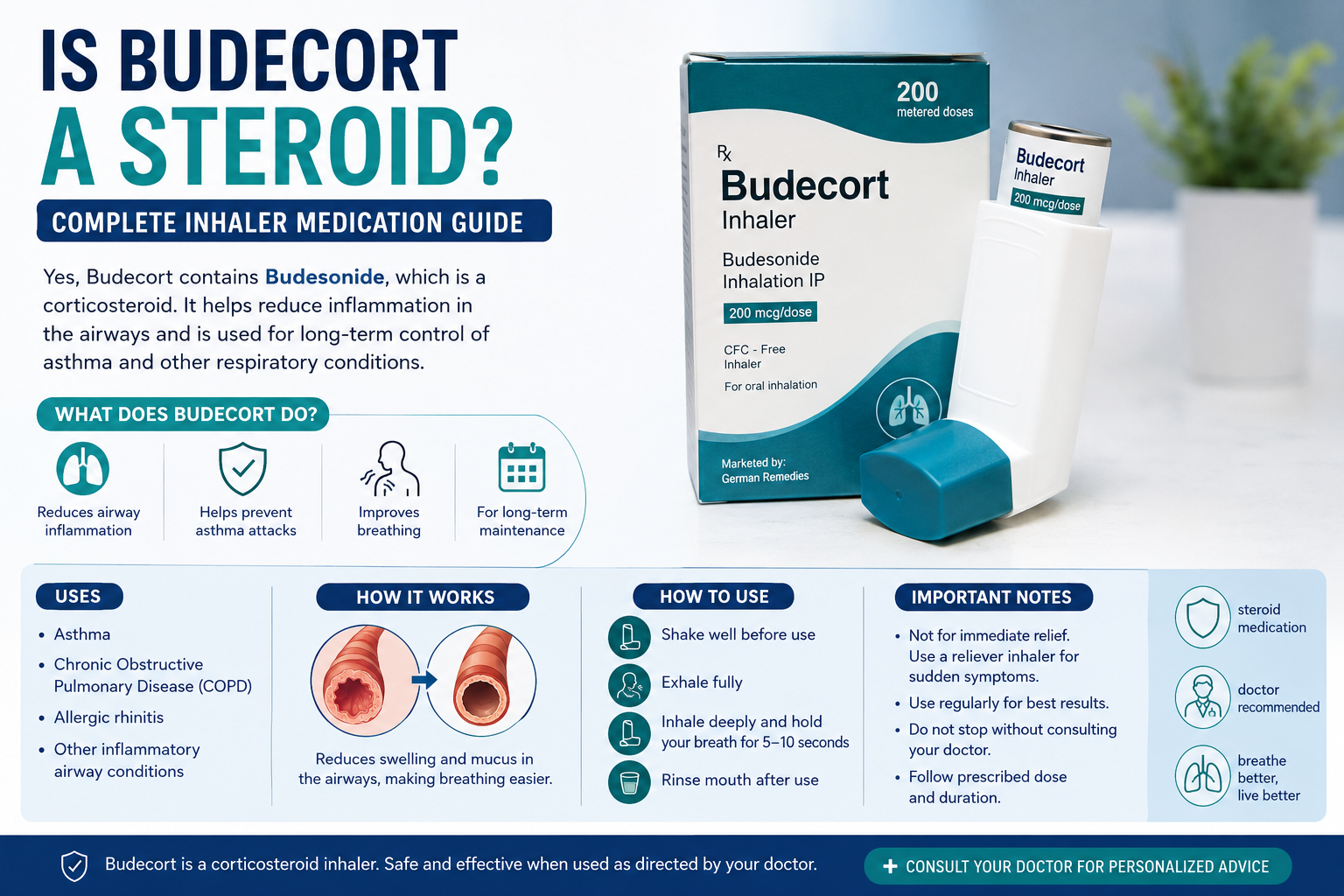
Budecort is a brand name for budesonide, a synthetic corticosteroid delivered via an inhaler or nebulizer. It is not an anabolic steroid; it belongs to the glucocorticoid class of corticosteroids, which are entirely distinct from the sex-hormone-derived anabolic-androgenic steroids (AAS) used illicitly for muscle growth. Budesonide’s primary role is to reduce inflammation in the airways, making it a cornerstone maintenance therapy for asthma and chronic obstructive pulmonary disease (COPD). [1]
When inhaled, budesonide binds to glucocorticoid receptors in the cells lining the bronchial tubes. This interaction suppresses the production of pro-inflammatory cytokines like interleukins and leukotrienes, stabilizes mast cells, and reduces the infiltration of eosinophils—white blood cells that drive allergic airway inflammation. Over days to weeks, this results in decreased airway swelling, less mucus production, and a lower likelihood of bronchospasm triggered by exercise, allergens, or cold air. Unlike rescue inhalers such as albuterol, Budecort does not provide immediate relief; it is a controller medication, meant to be used daily to prevent symptoms from arising. [2]
The critical distinction that fitness enthusiasts must grasp is that budesonide’s anti-inflammatory action is localized to the lungs. Although a small fraction enters the bloodstream, it does not build muscle, affect testosterone levels, or produce the androgenic side effects associated with anabolic steroids. The doses used are measured in micrograms, not milligrams, and the drug is designed to be metabolized quickly upon reaching the systemic circulation. Confusing Budecort with anabolic steroids is like confusing aspirin with testosterone—both are chemical compounds, but their mechanisms and effects are worlds apart.
Why the Steroid Confusion Exists and Must Be Corrected
The word “steroid” describes a chemical structure, not a function. The steroid nucleus—four fused carbon rings—is shared by cholesterol, vitamin D, estrogen, testosterone, cortisol, and budesonide. What distinguishes each is the specific side chains and receptor affinities. Anabolic steroids bind androgen receptors, promoting protein synthesis and muscle growth. Corticosteroids bind glucocorticoid receptors, modulating immune response and inflammation. [3]
The fear of inhaled corticosteroids (ICS) has led to measurable harm. Studies in respiratory medicine consistently show that poor adherence to ICS therapy is a leading cause of preventable asthma exacerbations, emergency room visits, and even deaths. Many patients, particularly bodybuilders and athletes, refuse or underuse their prescribed inhalers because they fear “steroid” side effects—weight gain, muscle wasting, immunosuppression—that are actually associated with high-dose systemic corticosteroids (oral prednisone, for example), not with standard ICS doses. [4] Budecort, at prescribed doses, does not cause muscle loss, fat gain, or hormonal disruption. In fact, by controlling airway inflammation and allowing unrestricted training, it often enables athletes to build more muscle and endurance than they could while gasping for air.
Budecort Uses: Beyond Asthma to Exercise-Induced Respiratory Protection
Asthma Maintenance
Budecort is FDA-approved for the maintenance treatment of persistent asthma in adults and children. It reduces the frequency and severity of symptoms—wheezing, chest tightness, coughing, shortness of breath—and decreases the need for rescue inhalers. It is not approved for acute bronchospasm.
Exercise-Induced Bronchoconstriction (EIB)
Athletes without chronic asthma may experience EIB, where vigorous exercise triggers airway narrowing. While short-acting beta-agonists are the first line for acute prevention, ICS like budesonide are used when EIB is part of underlying persistent airway inflammation. Regular use of Budecort can reduce the hyper-responsiveness of airways, allowing athletes to train outdoors in cold, dry air or during high-pollen seasons without debilitating breathing difficulties. [5]
COPD Management
For patients with COPD, especially those with frequent exacerbations, budesonide (often combined with a long-acting bronchodilator) reduces flare-ups and improves lung function. Budecort is sometimes prescribed off-label in combination products, though its primary FDA approval remains for asthma.
How Budecort Works: A Cellular-Level Explanation for the Educated Athlete
After inhalation, budesonide particles deposit in the bronchial epithelium and dissolve into the airway lining fluid. The lipophilic molecule diffuses into target cells and binds the glucocorticoid receptor (GR) in the cytoplasm. The drug-receptor complex then translocates to the nucleus, where it can either activate anti-inflammatory genes (transactivation) or repress pro-inflammatory genes (transrepression) by interfering with transcription factors like NF-kB and AP-1. The net effect is reduced synthesis of inflammatory mediators and prevention of the inflammatory cell recruitment that thickens the airway wall and makes it twitchy. [6]
Unlike systemic steroids, which flood every tissue, budesonide undergoes extensive first-pass metabolism in the liver (over 90%), meaning that any swallowed portion is rapidly inactivated. This high first-pass metabolism, combined with the low microgram doses, makes Budecort a targeted therapy with minimal systemic impact. For athletes concerned about drug testing, budesonide is not banned by WADA. Inhaled corticosteroids are permitted without a Therapeutic Use Exemption, though it’s always wise to check current WADA lists and declare medications if required.
Budecort Dosage: How to Use It Correctly
Dosage is individualized and must be titrated to the lowest effective dose that maintains control. The following table summarizes typical dosing guidelines based on medical literature and prescribing information. [7]
| Patient Group | Starting Dose | Maximum Dose | Frequency |
|---|---|---|---|
| Adults with mild to moderate asthma | 200–400 mcg/day | 800 mcg/day | Usually divided into 2 doses (every 12 hours) |
| Adults with severe asthma | 400–800 mcg/day | 1600 mcg/day (in some guidelines) | Divided |
| Children (6–12 years) | 200–400 mcg/day | 400 mcg/day | Divided |
Pro Tip for Correct Inhaler Technique: Shake the inhaler well. Exhale fully away from the device. Place the mouthpiece between lips, forming a tight seal. Press the canister while beginning a slow, deep inhalation (over 3–5 seconds). Hold your breath for 10 seconds to allow particles to settle. Rinse your mouth with water and spit—do not swallow—to prevent oral thrush and reduce systemic absorption via the gut.
Side Effects of Budecort: What to Expect and How to Mitigate
At therapeutic doses, Budecort is generally well-tolerated, but side effects can occur, particularly if technique is poor or doses are high. The most common side effects are local, due to the deposition of the steroid in the mouth and throat.
Common Side Effects
- Oral thrush (candidiasis): White patches in the mouth or on the tongue. Prevented by rinsing and spitting after each use.
- Dysphonia (hoarse voice): Caused by steroid deposition on the vocal cords. Rinsing and using a spacer device can reduce incidence.
- Cough or throat irritation: Usually transient and diminishes with continued use. A spacer may help.
Rare but Serious Side Effects (with chronic high-dose use or poor technique leading to systemic exposure)
- Adrenal suppression: Prolonged use at high doses (typically >800 mcg/day in adults) can suppress the hypothalamic-pituitary-adrenal axis, leaving the body unable to mount a stress response. This is rare with standard ICS but must be considered in patients on combination therapy with oral steroids.
- Reduced bone density: Very high cumulative inhaled doses may modestly increase fracture risk, though the effect is far smaller than with oral corticosteroids. Adequate calcium and vitamin D intake remains important for all patients.
- Growth delay in children: ICS can slightly reduce growth velocity in children, but uncontrolled asthma suppresses growth more severely. Pediatric dosing is carefully titrated to the lowest effective dose. [8]
- Cataracts and glaucoma: Very rare with ICS monotherapy, but patients with a family history should have regular eye exams.
Warning: Do not suddenly stop Budecort, especially if you have been on it long-term. Abrupt withdrawal can trigger severe asthma exacerbation and, in rare cases, adrenal crisis. Your physician will taper the dose if discontinuation is necessary.
Drug Interactions and Lifestyle Considerations for Fitness Enthusiasts
Budecort has few significant drug interactions because its systemic exposure is low. However, potent CYP3A4 inhibitors like ketoconazole, itraconazole, or ritonavir can increase budesonide blood levels, potentially leading to systemic corticosteroid effects. Athletes on HIV protease inhibitors or certain antifungal medications should discuss this with their doctor. [9]
From a fitness perspective, the most critical interaction is with training itself. Intense exercise in cold, dry air can trigger bronchoconstriction even in well-controlled patients. Using Budecort as prescribed, warming up gradually, covering the mouth with a buff in cold weather, and staying hydrated are synergistic strategies. Some athletes find that scheduling their maintenance dose before a workout (with enough time for deposition and airway calming) enhances performance.
Budecort vs. Anabolic Steroids: A Definitive Table Comparison
The table below clarifies the differences that every athlete must understand.
| Feature | Corticosteroid (Budesonide/Budecort) | Anabolic-Androgenic Steroid (Testosterone, Trenbolone, etc.) |
|---|---|---|
| Receptor Target | Glucocorticoid receptor | Androgen receptor |
| Primary Effect | Anti-inflammatory, immunosuppressive | Muscle protein synthesis, androgenic effects |
| Medical Use | Asthma, COPD, allergic rhinitis, inflammatory bowel disease | Hypogonadism, hormone replacement, muscle wasting (prescribed), performance enhancement (illegal) |
| Route | Inhaled (local lung delivery) | Injectable, oral, transdermal |
| Common Side Effects | Oral thrush, hoarseness (local); rare systemic effects at high doses | Testicular atrophy, acne, hair loss, aggression, cardiovascular disease, liver toxicity |
| WADA Status | Permitted without TUE when inhaled | Prohibited at all times |
| Muscle Growth | None | Significant |
Natural Supports for Respiratory Health: Nutrition and Supplements (Not Replacements)
While no supplement can replace Budecort for controlling persistent airway inflammation, certain nutrients may support lung function and reduce oxidative stress in athletes with asthma. These are adjuncts, not alternatives, to prescribed medication. Always discuss supplementation with your healthcare provider.
- Omega-3 fatty acids (EPA/DHA): Marine-derived omega-3s exhibit anti-inflammatory properties and may help modulate airway hyperresponsiveness. A 2020 review noted that higher dietary omega-3 intake was associated with better asthma control in some populations. [10]
- Vitamin D: Low vitamin D status is linked to increased asthma severity and exacerbations. Supplementing to achieve serum 25-hydroxyvitamin D levels above 30 ng/mL may enhance the anti-inflammatory effect of ICS. [11]
- Magnesium: Magnesium relaxes bronchial smooth muscle and is used intravenously in acute severe asthma. Oral magnesium glycinate supports general muscle relaxation and may reduce the frequency of bronchospasm in some individuals, though evidence for oral supplementation in chronic asthma is mixed.
- Antioxidants (vitamin C, quercetin, selenium): Asthmatics often have higher oxidative stress. A diet rich in fruits and vegetables, or targeted supplementation under guidance, may reduce airway epithelial damage. Quercetin, a plant flavonoid, stabilizes mast cells in vitro, but human data is limited.
- Caffeine: Caffeine is a mild bronchodilator and can improve airway function for 2–4 hours. Athletes sometimes use it as an adjunct, but it cannot replace rescue medication.
Critical Reminder: Never discontinue or reduce Budecort in favor of natural supplements. Uncontrolled asthma can be fatal. Supplements are complementary, and any changes to your asthma management plan must be overseen by your physician.
Myths That Undermine Asthma Treatment in the Fitness Community
Myth 1: “Inhaled Steroids Will Make Me Gain Weight Like Oral Prednisone”
High-dose oral corticosteroids cause fluid retention, increased appetite, and central fat deposition. Inhaled budesonide, at standard doses, has negligible systemic activity and does not cause weight gain, fluid retention, or fat redistribution. If you are gaining weight while using Budecort, look to your diet and training—not your inhaler.
Myth 2: “Using an Inhaler Is a Crutch; I Should Just Train Harder to Overcome Breathing Issues”
This is dangerous machismo. Uncontrolled airway inflammation causes airway remodeling over time—permanent thickening and scarring of the bronchial walls. Training through untreated asthma doesn’t make you tougher; it reduces your lung function and limits your performance ceiling. Proper medication allows you to train harder, not avoid training.
Myth 3: “Budecort Will Show Up on a Drug Test”
Inhaled budesonide is not prohibited by WADA. It is not a performance-enhancing substance in any traditional sense; it merely normalizes breathing. However, if you are a competitive athlete, always check the most current WADA Prohibited List and inform your anti-doping organization of prescribed medications.
Myth 4: “Steroid Is Steroid—It Will Shrink My Testicles”
Only anabolic-androgenic steroids suppress the hypothalamic-pituitary-gonadal axis and cause testicular atrophy. Budecort does not interact with sex hormone pathways. It will not affect your testosterone, sperm count, or libido.
Frequently Asked Questions
Is Budecort safe for long-term use?
Yes, when used as prescribed and at the lowest effective dose. Long-term safety data from decades of clinical use show that ICS like budesonide are well-tolerated, with the main risks being local side effects that can be minimized with proper technique. Regular monitoring by a physician ensures that any emerging issues—like adrenal suppression or bone density changes—are detected early.
Can I use Budecort only before exercise, like a pre-workout supplement?
No. Budecort is a maintenance medication, not a quick fix. It reduces underlying airway inflammation over days to weeks. Using it only pre-exercise will not provide immediate protection. For acute exercise-induced bronchoconstriction, your doctor may prescribe a short-acting beta-agonist (albuterol) to be used 15–30 minutes before activity. Do not repurpose Budecort as a pre-workout inhaler.
What if I forget a dose?
Take the missed dose as soon as you remember, unless it’s almost time for the next scheduled dose. In that case, skip the missed dose and resume your regular schedule. Do not double the dose to make up for a missed one.
Can I use Budecort while pregnant or breastfeeding?
Budesonide is classified as FDA Pregnancy Category B, meaning animal studies have not shown fetal risk, but human data is limited. Uncontrolled asthma poses a greater risk to both mother and fetus than ICS therapy. Pregnant women should consult their obstetrician and pulmonologist to weigh risks and benefits. Budesonide is considered one of the preferred ICS options during pregnancy. [12]
How do I know if my Budecort dose is correct?
Asthma control is assessed through symptom frequency, nighttime awakenings, rescue inhaler use, and peak flow measurements. If you are using your rescue inhaler more than twice a week or experiencing symptoms that limit activity, your Budecort dose may be insufficient. Work with your doctor to titrate upward if necessary, or downward if you’ve been stable for at least three months.
Conclusion: Breathe Freely, Train Fearlessly
The question “Is Budecort a steroid?” can now be answered with clarity: yes, it is a corticosteroid—and that is a good thing. It is not an anabolic steroid; it will not alter your hormones, damage your liver, or build muscle. What it will do, when used correctly, is allow you to breathe without obstruction, train without limitation, and protect your lungs from the progressive damage of uncontrolled inflammation. In the world of fitness and performance, oxygen is the ultimate anabolic. Budecort ensures your body can use it.
If you have been prescribed Budecort, use it with confidence, respect the dosage, and maintain open communication with your healthcare provider. Combine it with smart nutrition, proper warm-up protocols, and environmental awareness to maximize your athletic potential. Do not let the word “steroid” steal your breath. Education is the antidote to fear, and now you possess the knowledge to distinguish between a life-saving anti-inflammatory and a completely different class of compounds misused for muscle growth.
For more evidence-based guides on medications, respiratory health, and performance optimization, explore our library. Your health—and your next personal record—depends on getting the facts right.
References
- Global Initiative for Asthma. "Global Strategy for Asthma Management and Prevention." GINA, 2023.
- Barnes, P. J. "Inhaled Corticosteroids." Pharmaceuticals, vol. 3, no. 3, 2010, pp. 514–540.
- Schimmer, B. P. & Funder, J. W. "ACTH, Adrenal Steroids, and Pharmacology of the Adrenal Cortex." In Goodman & Gilman's: The Pharmacological Basis of Therapeutics, 13th Edition, McGraw-Hill, 2017.
- Bårnes, C. B. & Ulrik, C. S. "Asthma and Adherence to Inhaled Corticosteroids: Current Status and Future Perspectives." Respiratory Care, vol. 60, no. 3, 2015, pp. 455–468.
- Weiler, J. M. et al. "American Academy of Allergy, Asthma & Immunology Work Group Report: Exercise-induced asthma." Journal of Allergy and Clinical Immunology, vol. 119, no. 6, 2007, pp. 1349–1358.
- Derendorf, H. et al. "Pharmacokinetics and pharmacodynamics of inhaled corticosteroids." Journal of Allergy and Clinical Immunology, vol. 101, no. 4, 1998, pp. S440–S446.
- AstraZeneca. "Pulmicort Turbuhaler (budesonide) Prescribing Information." FDA, 2021.
- Kelly, H. W. et al. "Effect of inhaled glucocorticoids in childhood on adult height." New England Journal of Medicine, vol. 367, no. 10, 2012, pp. 904–912.
- Lexicomp Online, "Budesonide (Inhalation): Drug Interactions." UpToDate, 2024.
- Yang, H. et al. "Omega-3 fatty acids and asthma: a systematic review and meta-analysis." Journal of Allergy and Clinical Immunology: In Practice, vol. 8, no. 8, 2020, pp. 2758–2766.
- Jolliffe, D. A. et al. "Vitamin D supplementation to prevent asthma exacerbations: a systematic review and meta-analysis of individual participant data." The Lancet Respiratory Medicine, vol. 5, no. 11, 2017, pp. 881–890.
- National Asthma Education and Prevention Program. "Expert Panel Report 3: Guidelines for the Diagnosis and Management of Asthma." National Heart, Lung, and Blood Institute, 2007.
- Lipworth, B. J. "Systemic adverse effects of inhaled corticosteroid therapy: A systematic review and meta-analysis." Archives of Internal Medicine, vol. 159, no. 9, 1999, pp. 941–955.
- Price, D. B. et al. "Adverse outcomes from initiation of systemic corticosteroids for asthma: a longitudinal UK study." The European Respiratory Journal, vol. 52, no. 5, 2018, p. 1801013.
- WADA. "World Anti-Doping Code International Standard Prohibited List." World Anti-Doping Agency, 2024.
- Anderson, S. D. & Kippelen, P. "Airway injury as a mechanism for exercise-induced bronchoconstriction in elite athletes." Journal of Allergy and Clinical Immunology, vol. 122, no. 2, 2008, pp. 225–235.
- Fanta, C. H. "Asthma." New England Journal of Medicine, vol. 360, no. 10, 2009, pp. 1002–1014.
- Barnes, P. J. "How corticosteroids control inflammation: Quintiles Prize Lecture 2005." British Journal of Pharmacology, vol. 148, no. 3, 2006, pp. 245–254.
Share