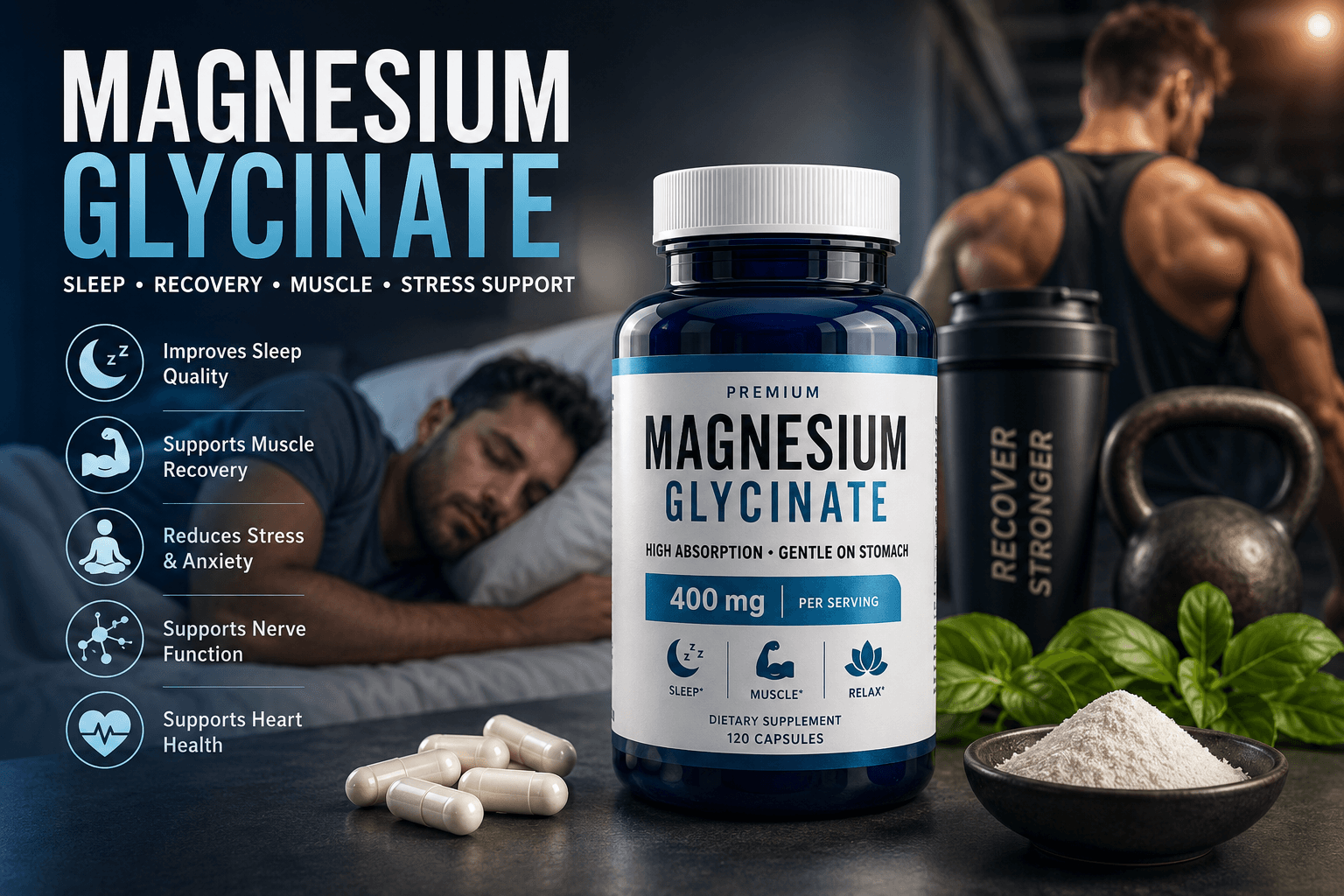
Magnesium Glycinate Benefits: The Ultimate Guide for Sleep, Recovery, Muscle Function & Stress Support
By Artemis_Strength•May 24, 2026•9 min read
Magnesium Glycinate Benefits: The Ultimate Guide for Sleep, Recovery, Muscle Function & Stress Support
Magnesium glycinate has rapidly become one of the most recommended supplements in the health, fitness, and wellness industry. From professional athletes and bodybuilders to busy professionals and people struggling with sleep issues, magnesium glycinate is gaining attention for its exceptional absorption and wide range of health benefits.
Magnesium is involved in more than 300 biochemical reactions inside the human body. It plays a critical role in muscle contraction, nervous system balance, sleep quality, cardiovascular health, hydration, stress management, and energy production. Yet despite its importance, magnesium deficiency is surprisingly common due to poor dietary habits, high stress levels, intense exercise, excessive sweating, and processed food consumption.
Among all magnesium forms available today, magnesium glycinate stands out because of its superior bioavailability and gentle digestive profile. Unlike magnesium oxide or magnesium citrate, magnesium glycinate is less likely to cause stomach discomfort while offering enhanced calming and recovery benefits.
In this comprehensive guide, we will explore everything you need to know about magnesium glycinate, including its benefits, dosage, timing, side effects, athletic advantages, sleep support, recovery optimization, and how to choose the best supplement.
What Is Magnesium Glycinate?
Magnesium glycinate is a highly absorbable form of magnesium created by combining elemental magnesium with glycine, an amino acid known for its calming effects on the nervous system.
This chelated structure allows magnesium glycinate to be absorbed efficiently while minimizing digestive irritation. The glycine component may also contribute additional benefits related to sleep quality, cognitive relaxation, and nervous system recovery.
Key Insight: Magnesium glycinate is widely considered one of the best forms of magnesium for sleep support, muscle recovery, stress management, and long-term supplementation.
Why Magnesium Is Essential for the Human Body
Magnesium supports nearly every major physiological system in the body. Without adequate magnesium levels, physical performance, recovery, hormonal balance, and overall wellness can decline significantly.
Major Functions of Magnesium
- Supports muscle contraction and relaxation
- Helps regulate nervous system function
- Supports healthy sleep cycles
- Assists ATP energy production
- Promotes hydration and electrolyte balance
- Supports cardiovascular health
- Helps maintain healthy blood sugar regulation
- Supports bone density and skeletal health
- Assists protein synthesis and recovery
- Supports stress adaptation and mood balance
Top Benefits of Magnesium Glycinate
1. Improves Sleep Quality
One of the primary reasons people use magnesium glycinate is to improve sleep quality naturally. Magnesium helps regulate neurotransmitters that influence relaxation and sleep cycles. Glycine may also promote calming effects that support deeper sleep.
Many individuals report improvements in:
- Sleep onset time
- Deep sleep quality
- Nighttime relaxation
- Reduced nighttime awakenings
- Morning recovery and freshness
Pro Tip: Taking magnesium glycinate 30 to 60 minutes before bed may improve relaxation and nighttime recovery.
2. Supports Muscle Recovery and Athletic Performance
Athletes and gym-goers lose significant amounts of magnesium through sweat and intense physical activity. Low magnesium levels can negatively affect muscle contractions, hydration, endurance, and recovery.
Magnesium glycinate helps support:
- Muscle relaxation
- Recovery after training
- Reduced muscle cramps
- Improved neuromuscular function
- Better electrolyte balance
- Enhanced training consistency
Bodybuilders and strength athletes often combine magnesium glycinate with adequate hydration, potassium, sodium, and quality sleep to optimize recovery capacity.
3. Helps Reduce Stress and Anxiety
Modern lifestyles often expose people to chronic stress, poor sleep, overstimulation, and excessive caffeine intake. Magnesium plays an important role in nervous system regulation and stress adaptation.
Magnesium glycinate may help:
- Promote relaxation
- Reduce nervous tension
- Support calmer mood states
- Improve stress resilience
- Support recovery from mental fatigue
4. Supports Healthy Muscle Function
Magnesium is critical for muscle contraction and relaxation. Deficiency can increase the risk of:
- Muscle cramps
- Twitching
- Tightness
- Weakness
- Fatigue
This is one reason why magnesium glycinate has become popular among athletes, runners, bodybuilders, and individuals performing high-volume resistance training.
5. Supports Heart Health
Magnesium contributes to healthy cardiovascular function by supporting proper muscle contractions within the heart and helping maintain electrolyte balance.
Adequate magnesium intake may help support:
- Healthy blood pressure
- Cardiovascular performance
- Electrolyte regulation
- Normal heart rhythm
6. Supports Bone Health
Magnesium works alongside calcium and vitamin D to support skeletal integrity. Many people focus heavily on calcium while overlooking magnesium's role in bone metabolism.
Optimal magnesium intake may help support:
- Bone mineral density
- Calcium utilization
- Skeletal strength
- Long-term structural health
Signs of Magnesium Deficiency
Magnesium deficiency can develop gradually and may be overlooked for long periods.
Common Symptoms
- Muscle cramps
- Poor sleep quality
- Fatigue
- Stress sensitivity
- Headaches
- Weak recovery
- Muscle tightness
- Eye twitching
- Low energy levels
- Restlessness
Important: Persistent symptoms should always be discussed with a qualified healthcare professional to identify potential deficiencies or underlying medical conditions.
Why Magnesium Deficiency Is So Common Today
Despite magnesium being essential for more than 300 enzymatic reactions, many adults fail to meet recommended intake levels.
- Highly processed food consumption
- Reduced mineral content in modern agricultural soils
- Chronic psychological stress
- Heavy sweating from exercise
- High caffeine intake
- Poor sleep habits
- Certain medications that affect mineral balance
According to research published in Nutrients, suboptimal magnesium intake remains common in both developed and developing nations, potentially impacting sleep quality, metabolic health, recovery, and cardiovascular function.
Magnesium Glycinate vs Other Forms of Magnesium
| Magnesium Type | Absorption | Primary Benefit | Digestive Tolerance |
|---|---|---|---|
| Magnesium Glycinate | High | Sleep, stress, recovery | Excellent |
| Magnesium Citrate | Moderate to High | Digestion support | May cause loose stools |
| Magnesium Oxide | Low | Budget supplementation | Lower tolerance |
| Magnesium Malate | Moderate | Energy support | Good |
| Magnesium Threonate | High | Cognitive support | Good |
Best Time to Take Magnesium Glycinate
The best timing depends on your goals.
For Sleep
Take magnesium glycinate approximately 30 to 60 minutes before bedtime.
For Recovery
Many athletes prefer taking magnesium glycinate after training or during evening meals to support overnight recovery.
For General Wellness
Consistency matters more than timing. Daily intake is more important than finding a “perfect” schedule.
Which Form of Magnesium Is Most Bioavailable?
Not all magnesium supplements are absorbed equally. The form of magnesium can significantly affect bioavailability, digestive tolerance, and specific health outcomes.
| Magnesium Form | Bioavailability | Primary Use | Digestive Tolerance |
|---|---|---|---|
| Magnesium Glycinate | Very High | Sleep, stress, recovery | Excellent |
| Magnesium Threonate | High | Cognitive support | Excellent |
| Magnesium Malate | High | Energy production | Good |
| Magnesium Citrate | Moderate to High | Digestive support | May cause loose stools |
| Magnesium Oxide | Low | Budget supplementation | Lower |
Supplement Researcher's Note: Magnesium glycinate is widely considered one of the most bioavailable and best-tolerated forms of magnesium. Its chelated structure allows efficient absorption while the glycine component may provide additional calming and sleep-supportive effects.
Research published in the Journal of the American College of Nutrition and Magnesium Research has demonstrated that organic magnesium compounds such as glycinate, citrate, and lactate generally show superior absorption compared with inorganic forms like magnesium oxide.
Recommended Magnesium Glycinate Dosage
Dosage requirements vary depending on dietary intake, training intensity, stress levels, age, and overall health status.
| Goal | Typical Daily Range |
|---|---|
| General Wellness | 200 to 300 mg elemental magnesium |
| Sleep Support | 200 to 400 mg |
| Athletic Recovery | 300 to 400 mg |
| High Sweat Loss Athletes | Higher individualized needs |
Supplement Tip: Always check the label for elemental magnesium content rather than capsule weight alone.
How Magnesium Glycinate Supports Bodybuilders and Athletes
Recovery is one of the most underestimated aspects of performance optimization. Athletes often focus heavily on protein, creatine, and pre-workouts while neglecting electrolyte and mineral balance.
Magnesium glycinate can support:
- Muscle relaxation after intense sessions
- Hydration efficiency
- Nervous system recovery
- Sleep quality during high-volume training
- Reduction in nighttime cramps
- Training consistency
Foods Rich in Magnesium
Although supplementation can be useful, magnesium-rich foods should remain a foundational part of a healthy diet.
Best Dietary Sources
- Spinach
- Pumpkin seeds
- Almonds
- Cashews
- Dark chocolate
- Avocados
- Black beans
- Whole grains
- Fatty fish
- Bananas
How to Choose the Best Magnesium Glycinate Supplement
Not all supplements are created equally. Product quality, ingredient sourcing, and formulation transparency matter significantly.
What to Look For
- Clearly listed elemental magnesium content
- Chelated magnesium glycinate form
- Third-party testing
- Minimal unnecessary fillers
- Trusted brand reputation
- Transparent labeling
What to Avoid
- Excessive proprietary blends
- Unclear ingredient labels
- Very low elemental magnesium amounts
- Low-quality filler ingredients
Potential Side Effects of Magnesium Glycinate
Magnesium glycinate is generally well tolerated when used appropriately.
Possible Side Effects
- Mild digestive discomfort
- Drowsiness in some individuals
- Loose stools at excessive doses
Most people tolerate magnesium glycinate far better than magnesium oxide or high-dose magnesium citrate.
Medical Note: Individuals with kidney disorders or those using prescription medications should consult a healthcare professional before beginning magnesium supplementation.
Stress, poor diet quality, processed foods, and inadequate sleep can increase magnesium needs for almost anyone.
Can Magnesium Glycinate Be Combined With Other Supplements?
Yes. Magnesium glycinate is commonly combined with:
- Creatine
- Protein powder
- Zinc
- Vitamin D3
- Omega-3 supplements
- Electrolyte formulas
- Ashwagandha
Many nighttime recovery stacks include magnesium glycinate due to its calming and muscle-supportive properties.
Who Can Benefit Most From Magnesium Glycinate?
- Athletes and bodybuilders
- Individuals with poor sleep quality
- People under chronic stress
- Individuals with muscle cramps
- People with low dietary magnesium intake
- Shift workers and busy professionals
- Individuals focused on recovery and wellness
Frequently Asked Questions About Magnesium Glycinate
Is magnesium glycinate good for sleep?
Yes. Magnesium glycinate is widely used to support relaxation, sleep quality, and nighttime recovery due to its calming properties and excellent absorption.
Can magnesium glycinate help muscle cramps?
Magnesium supports muscle contractions and relaxation, which may help reduce cramping associated with low magnesium levels or heavy exercise.
Can I take magnesium glycinate daily?
Most healthy adults can use magnesium glycinate daily when following appropriate dosage guidelines.
Does magnesium glycinate cause stomach issues?
Magnesium glycinate is generally considered one of the gentlest forms of magnesium on digestion.
Should athletes take magnesium glycinate?
Athletes with high sweat loss, heavy training loads, and poor recovery may benefit significantly from adequate magnesium intake.
Can magnesium glycinate improve recovery?
By supporting sleep quality, muscle function, hydration balance, and nervous system recovery, magnesium glycinate may positively support overall recovery processes.
Final Verdict: Is Magnesium Glycinate Worth It?
Magnesium glycinate is one of the most effective and versatile wellness supplements available today. Whether your goals involve better sleep, improved recovery, enhanced athletic performance, stress management, or muscle support, magnesium glycinate offers a science-backed solution with excellent tolerability.
Unlike many trendy supplements that rely on hype, magnesium is a foundational mineral required for optimal human function. Modern diets, stress levels, intense training, and inadequate recovery habits can all increase magnesium requirements, making supplementation highly valuable for many individuals.
Bottom Line: Magnesium glycinate combines high absorption, strong recovery support, excellent digestive tolerance, and calming properties, making it one of the best magnesium forms for overall wellness and athletic recovery.
If you are serious about improving sleep quality, supporting muscle recovery, optimizing stress management, and enhancing long-term wellness, magnesium glycinate may deserve a permanent place in your supplement routine.
Explore premium-quality magnesium glycinate supplements and recovery-focused wellness products to support your fitness journey and overall health goals.
Bottom Line: Magnesium glycinate combines superior absorption, excellent digestive tolerance, and strong scientific support for sleep, recovery, stress management, muscle function, and overall wellness. For most people seeking a daily magnesium supplement, it remains one of the best evidence-based options available.
If you are serious about improving sleep quality, supporting muscle recovery, optimizing stress management, and enhancing long-term wellness, magnesium glycinate may deserve a permanent place in your supplement routine.
Explore premium-quality magnesium glycinate supplements and recovery-focused wellness products to support your fitness journey and overall health goals.
Magnesium Glycinate Myths Debunked
As magnesium glycinate has grown in popularity, several misconceptions have emerged regarding its effectiveness, dosage, and benefits. Understanding the facts can help you make better supplementation decisions and avoid common mistakes.
Myth 1: More Magnesium Is Always Better
Many people assume that taking larger amounts of magnesium will automatically produce better results. In reality, magnesium works best when consumed in appropriate amounts based on individual needs.
Excessive magnesium supplementation may increase the risk of digestive discomfort, drowsiness, and unnecessary nutrient imbalances without providing additional benefits.
Reality: Consistent daily intake within recommended ranges is typically more effective than megadosing.
Myth 2: All Magnesium Supplements Are the Same
Not all magnesium forms have equal absorption rates or benefits. Different magnesium compounds serve different purposes.
- Magnesium Glycinate: Sleep, recovery, stress management
- Magnesium Threonate: Cognitive support
- Magnesium Malate: Energy production
- Magnesium Citrate: Digestive support
- Magnesium Oxide: Lower absorption, often used in budget supplements
Research suggests that organic magnesium compounds such as glycinate generally demonstrate superior bioavailability compared to less absorbable forms like magnesium oxide.
Myth 3: Magnesium Glycinate Works Like a Sleeping Pill
Magnesium glycinate is not a sedative medication and does not force the body to sleep. Instead, it supports normal nervous system function, relaxation, and healthy sleep processes.
Individuals with magnesium deficiency or high stress levels may notice greater improvements in sleep quality after correcting inadequate magnesium intake.
Expert Insight: Magnesium glycinate works best as part of a comprehensive sleep routine that includes proper sleep hygiene, stress management, and consistent bedtimes.
Myth 4: Only Athletes Need Magnesium Supplements
Although athletes often have increased magnesium requirements due to sweat loss and training stress, magnesium plays essential roles in virtually every person's health.
Busy professionals, shift workers, older adults, individuals under chronic stress, and people consuming highly processed diets may also benefit from improving magnesium intake.
Myth 5: Magnesium Glycinate Causes Digestive Problems
Among all commonly available magnesium forms, magnesium glycinate is generally considered one of the gentlest on the digestive system.
Unlike magnesium citrate or magnesium oxide, which may cause loose stools at higher doses, magnesium glycinate is usually well tolerated when used as directed.
Myth 6: You Can Feel the Benefits Immediately
While some individuals report improved relaxation within days, magnesium status often improves gradually over time. Sleep quality, recovery, muscle function, and stress resilience may require several weeks of consistent supplementation to noticeably improve.
Long-term consistency is typically more important than expecting overnight results.
Myth 7: Magnesium Supplements Replace a Healthy Diet
Supplementation should complement—not replace—a nutrient-rich diet. Whole foods provide magnesium alongside fiber, vitamins, minerals, antioxidants, and other compounds that contribute to overall health.
Foods such as spinach, pumpkin seeds, almonds, cashews, avocados, legumes, and dark chocolate remain important sources of dietary magnesium.
Myth 8: Magnesium Glycinate Is Only for Sleep
Sleep support is one of the most recognized benefits of magnesium glycinate, but its role extends far beyond bedtime.
- Supports muscle function and recovery
- Helps maintain electrolyte balance
- Supports nervous system health
- Contributes to cardiovascular function
- Supports energy production
- Helps manage physical and mental stress
- Supports overall wellness and healthy aging
Bottom Line: Magnesium glycinate is not a miracle supplement, but it is one of the most evidence-backed forms of magnesium available. When combined with proper nutrition, sleep, hydration, and training habits, it can play a valuable role in supporting recovery, performance, stress management, and long-term health.
Research References
- Boyle NB, Lawton C, Dye L. The Effects of Magnesium Supplementation on Subjective Anxiety and Stress. Nutrients.
- Abbasi B, Kimiagar M, Sadeghniiat K, et al. The Effect of Magnesium Supplementation on Primary Insomnia in Elderly Adults. Journal of Research in Medical Sciences.
- Wienecke E, Nolden C. Magnesium and Exercise Performance. Magnesium Research.
- Volpe SL. Magnesium in Disease Prevention and Overall Health. Advances in Nutrition.
- DiNicolantonio JJ, O'Keefe JH, Wilson W. Subclinical Magnesium Deficiency: A Principal Driver of Cardiovascular Disease. Open Heart.
- Gröber U, Schmidt J, Kisters K. Magnesium in Prevention and Therapy. Nutrients.
- Rosanoff A, Weaver CM, Rude RK. Suboptimal Magnesium Status in the United States. Nutrients.
- Walker AF, Marakis G, Christie S, Byng M. Mg Citrate Found More Bioavailable than Other Magnesium Preparations. Magnesium Research.
- Cuciureanu MD, Vink R. Magnesium and Stress. Critical Reviews in Food Science and Nutrition.
- Nielsen FH. Magnesium Deficiency and Increased Inflammation. Journal of the American College of Nutrition.
Share
