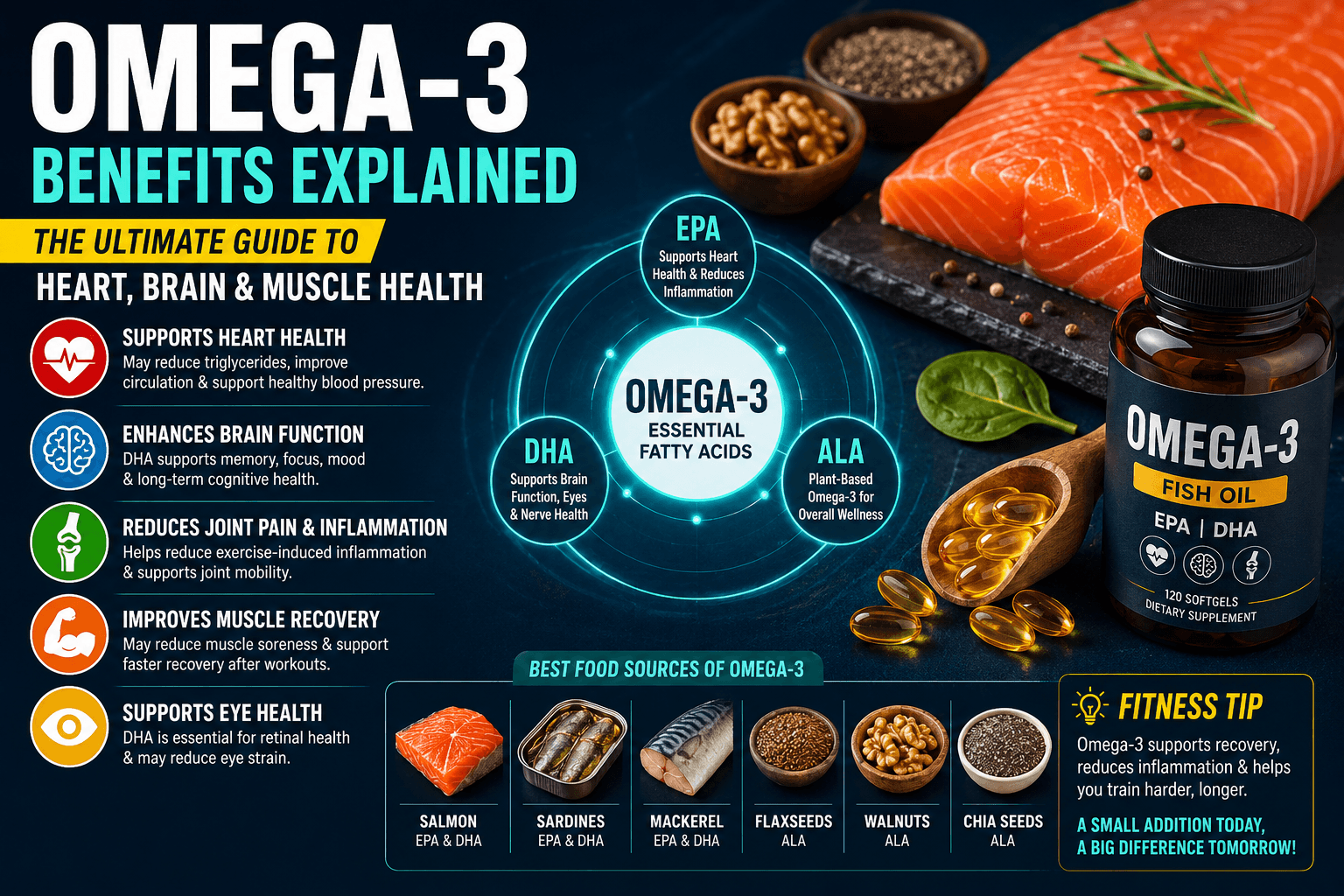
Omega-3 Benefits Explained: The Ultimate Guide to Heart, Brain & Muscle Health
By Artemis_Strength•May 24, 2026•3 min read
Omega-3 Benefits Explained: The Ultimate Guide to Heart, Brain & Muscle Health
Omega-3 fatty acids are among the most extensively researched nutrients in modern nutrition science. From supporting cardiovascular function and cognitive performance to enhancing recovery after intense exercise, omega-3s play a critical role in overall health, longevity, and athletic performance.
Quick Fact: Omega-3 fatty acids are classified as essential fats because the human body cannot produce them in sufficient amounts. They must be obtained through food or supplementation.
What Are Omega-3 Fatty Acids?
Omega-3s are a family of polyunsaturated fatty acids that contribute to cell membrane integrity, hormone signaling, inflammation regulation, and neurological function. The three primary forms include:
- EPA (Eicosapentaenoic Acid): Supports cardiovascular health, exercise recovery, and inflammatory balance.
- DHA (Docosahexaenoic Acid): Essential for brain development, cognitive performance, and eye health.
- ALA (Alpha-Linolenic Acid): Found in plant foods such as flaxseeds, chia seeds, and walnuts. Conversion to EPA and DHA is limited in humans.
Why Omega-3 Is Essential for Modern Health
The modern diet often contains excessive omega-6 fatty acids and insufficient omega-3 intake. This imbalance may contribute to chronic low-grade inflammation, cardiovascular concerns, and impaired recovery from exercise.
Increasing omega-3 consumption through fatty fish or high-quality supplements can help restore a healthier fatty acid balance and support long-term wellness.
Omega-3 Benefits for Heart Health
Cardiovascular disease remains one of the leading health concerns globally. Omega-3 fatty acids have been extensively studied for their potential role in supporting heart health.
Key Cardiovascular Benefits
- Supports healthy triglyceride levels
- Promotes optimal blood vessel function
- Supports healthy blood pressure regulation
- May improve circulation and endothelial function
- Supports overall cardiovascular wellness
Fitness Coach Tip: Many endurance athletes include fish oil supplementation as part of their recovery strategy because improved circulation may support nutrient delivery to working muscles.
A landmark scientific advisory from the American Heart Association reported that marine omega-3 fatty acids may provide meaningful cardiovascular benefits, particularly among individuals with elevated cardiovascular risk.
Omega-3 and Brain Function
DHA is one of the most abundant fatty acids found in the human brain. Adequate DHA intake is associated with healthy cognitive performance throughout life.
Brain Health Benefits
- Supports memory and learning
- Promotes concentration and mental clarity
- Supports healthy mood regulation
- Contributes to normal neurological function
- Supports healthy aging of the brain
Research published in Frontiers in Aging Neuroscience suggests that omega-3 intake may help support cognitive health and brain function as individuals age.
Omega-3 for Inflammation and Joint Health
Exercise is beneficial, but intense training creates temporary inflammatory responses. Omega-3 fatty acids may help regulate these responses and support recovery.
Benefits for Active Individuals
- Supports healthy inflammatory balance
- May reduce exercise-induced soreness
- Supports joint comfort and mobility
- Helps maintain training consistency
- Supports connective tissue health
A review published in Journal of the International Society of Sports Nutrition found evidence suggesting omega-3 supplementation may aid recovery and support adaptation to training stress.
Omega-3 Benefits for Muscle Recovery and Performance
Athletes increasingly use omega-3 supplements to support recovery, muscle maintenance, and overall performance.
How Omega-3 Supports Training
- Supports post-workout muscle recovery
- May help reduce delayed onset muscle soreness (DOMS)
- Supports muscle protein synthesis signaling
- May improve training quality between sessions
- Supports lean muscle preservation during dieting phases
Research published in Clinical Science demonstrated that omega-3 fatty acids may enhance muscle protein synthesis responses under certain conditions.
Sports Nutrition Insight: Combining adequate protein intake with omega-3 supplementation may provide complementary benefits for recovery and muscle maintenance.
Omega-3 and Eye Health
DHA is a major structural component of the retina. Maintaining adequate omega-3 intake is important for visual function and eye health.
- Supports retinal integrity
- Promotes visual performance
- May help reduce dry eye symptoms
- Supports long-term eye health
Several studies have identified DHA as a critical nutrient for maintaining healthy retinal tissue and visual performance.
Omega-3 and Mental Well-Being
Emerging research suggests omega-3 fatty acids may contribute to emotional wellness and psychological resilience.
- Supports healthy mood balance
- May assist stress management
- Supports cognitive resilience
- Contributes to overall mental wellness
A meta-analysis published in Translational Psychiatry reported that omega-3 fatty acids may offer supportive benefits for mood health when consumed consistently.
Best Food Sources of Omega-3
| Food Source | Primary Omega-3 Type | Key Benefits |
|---|---|---|
| Salmon | EPA & DHA | Supports heart, brain, and recovery |
| Sardines | EPA & DHA | Nutrient-dense and affordable |
| Mackerel | EPA & DHA | High omega-3 concentration |
| Herring | EPA & DHA | Supports cardiovascular wellness |
| Flaxseeds | ALA | Plant-based source |
| Chia Seeds | ALA | Rich in fiber and antioxidants |
| Walnuts | ALA | Convenient whole-food option |
Should You Take Omega-3 Supplements?
For individuals who consume little or no fatty fish, omega-3 supplements offer a practical solution to help meet daily requirements.
What to Look For
- High EPA and DHA content
- Third-party testing for purity
- Molecularly distilled products
- Low oxidation levels
- Transparent labeling
Types of Omega-3 Supplements
| Supplement Type | Best For | Notes |
|---|---|---|
| Fish Oil | General health | Most researched option |
| Krill Oil | Absorption support | Contains phospholipids |
| Algae Oil | Vegetarians and vegans | Direct DHA source |
Recommended Omega-3 Intake
Individual requirements vary based on age, activity level, dietary habits, and health goals.
| Goal | Suggested Daily EPA + DHA Intake |
|---|---|
| General Wellness | 250–500 mg |
| Active Lifestyle | 1000–2000 mg |
| Athletic Recovery | 1500–3000 mg |
Important: Individuals taking blood-thinning medications or managing medical conditions should consult a qualified healthcare professional before using high-dose omega-3 supplements.
Omega-3 Benefits for Fitness Enthusiasts
Whether your goal is muscle gain, fat loss, endurance performance, or recovery optimization, omega-3s can support multiple aspects of athletic performance.
- Supports recovery between training sessions
- May reduce exercise-induced inflammation
- Supports healthy hormone function
- Helps maintain lean muscle mass
- Supports cardiovascular endurance
- May improve training consistency
Which Form of Fish Oil Is Most Bioavailable?
Not all omega-3 supplements are absorbed equally. The form in which EPA and DHA are delivered can influence digestion, absorption, and utilization by the body.
| Fish Oil Form | Bioavailability | Common Sources | Notes |
|---|---|---|---|
| Triglyceride (TG) | High | Natural fish oil | Closest to the form found naturally in fish and generally well absorbed. |
| Re-Esterified Triglyceride (rTG) | Very High | Premium fish oil supplements | Often considered the gold standard for absorption and purity. |
| Phospholipid | Very High | Krill oil | May offer superior cellular uptake due to phospholipid structure. |
| Ethyl Ester (EE) | Moderate | Concentrated fish oils | Less expensive but generally absorbed less efficiently, especially when taken without food. |
Supplement Researcher's Note: Re-esterified triglyceride (rTG) fish oil and phospholipid-based krill oil are generally regarded as the most bioavailable omega-3 delivery forms. Standard triglyceride fish oil also provides excellent absorption and remains one of the most researched options available.
A comparative study published in Lipids in Health and Disease reported that re-esterified triglyceride fish oil demonstrated superior absorption compared with ethyl ester forms. Research on krill oil has also shown efficient EPA and DHA incorporation into tissues due to its phospholipid structure.
Common Omega-3 Myths Debunked
Myth #1: All Fish Oils Are Identical
Fish oil quality varies significantly based on EPA/DHA concentration, purification standards, freshness, and third-party testing.
Myth #2: More Omega-3 Is Always Better
Excessive intake does not necessarily produce greater benefits. Appropriate dosing based on individual needs is more important.
Myth #3: Plant Omega-3 Sources Work Exactly Like Fish Oil
ALA must be converted into EPA and DHA. Human conversion efficiency is relatively low, making marine sources more effective for increasing EPA and DHA status.
Myth #4: Athletes Don't Need Omega-3 Supplements
Research increasingly supports omega-3 intake as a useful nutritional strategy for recovery, performance support, and long-term health.
Frequently Asked Questions
Can Omega-3 Help Build Muscle?
Omega-3 does not directly build muscle, but it may support muscle protein synthesis, recovery, and training quality when combined with proper nutrition and resistance training.
Is Fish Oil Better Than Eating Fish?
Whole fish provides additional nutrients such as protein, vitamin D, selenium, and minerals. Supplements are useful when fish intake is insufficient.
Can Vegetarians Get Enough Omega-3?
Vegetarians can consume flaxseeds, chia seeds, walnuts, and algae-based omega-3 supplements to improve intake.
When Should I Take Omega-3 Supplements?
Omega-3 supplements are typically best consumed alongside meals containing dietary fat to enhance absorption.
How Long Does It Take to Notice Benefits?
Benefits vary depending on the individual and objective, but consistent supplementation for several weeks is generally required to meaningfully improve omega-3 status.
Final Thoughts
Omega-3 fatty acids remain one of the most evidence-backed nutritional interventions available today. Their benefits extend beyond heart health, influencing cognitive performance, recovery, joint function, visual health, and overall athletic performance.
Whether obtained through fatty fish, algae-based sources, or premium omega-3 supplements, maintaining adequate intake is a simple yet powerful strategy for supporting long-term health and fitness goals.
Bottom Line: If you are serious about optimizing recovery, performance, cardiovascular health, and longevity, omega-3 deserves a permanent place in your nutrition plan.
Research References
- Calder PC. Omega-3 fatty acids and inflammatory processes. Nutrients. 2020.
- Kris-Etherton PM et al. Fish Consumption, Fish Oil, Omega-3 Fatty Acids, and Cardiovascular Disease. American Heart Association.
- Gammone MA et al. Omega-3 Polyunsaturated Fatty Acids and Neurodegenerative Diseases. Frontiers in Aging Neuroscience.
- Lembke P et al. Omega-3 Fatty Acids and Recovery from Exercise. Journal of the International Society of Sports Nutrition.
- Smith GI et al. Fish Oil-Derived n-3 PUFA Therapy Increases Muscle Protein Synthesis. Clinical Science.
- Mocking RJT et al. Meta-analysis of Omega-3 Supplementation and Mood Disorders. Translational Psychiatry.
- Swanson D, Block R, Mousa SA. Omega-3 Fatty Acids EPA and DHA: Health Benefits Throughout Life. Advances in Nutrition.
Share