
Whey Protein for Lactose Intolerance: Safe Types, Digestibility & Expert Tips
By Artemis_strength•7 min read
Whey Protein and Lactose Intolerance: A Complete Guide to Gut-Friendly Gains
 Key Takeaways
 - Lactose intolerance does not automatically mean you must avoid all whey protein.
- Whey protein isolate and hydrolysate contain negligible lactose and are well tolerated by most.
- Whey concentrate is high in lactose and likely to trigger symptoms; avoid it.
- Combining whey with lactase enzymes, probiotics, or plant-based blends can further improve digestion.
Understanding Lactose Intolerance: Why Whey Can Be a Problem
Lactose intolerance occurs when the small intestine produces insufficient lactase, the enzyme required to break down lactose — the natural sugar in milk. Undigested lactose ferments in the colon, causing bloating, gas, cramps, and diarrhea. Regular whey protein concentrate can contain 4–5 grams of lactose per scoop, enough to provoke symptoms in sensitive individuals. However, modern filtration technology now allows manufacturers to isolate almost pure protein fractions, dramatically lowering the lactose burden.

Not All Whey Is Created Equal: Lactose Content by Type
| Whey Protein Type | Typical Lactose Content per 30g Serving | Suitable for Lactose Intolerance? |
|---|---|---|
| Whey Concentrate (WPC 80) | 3–5 grams | No — likely to cause symptoms |
| Whey Isolate (WPI 90+) | Less than 0.5 grams | Yes — well tolerated by most |
| Whey Hydrolysate (WPH) | Less than 0.1 grams | Yes — pre-digested, extremely low lactose |
Why Whey Isolate Is the Gold Standard for Lactose-Sensitive Individuals
Whey protein isolate undergoes advanced filtration processes — typically cross-flow microfiltration or ion exchange — that strip away almost all fat and lactose. The final product is over 90% pure protein with mere trace amounts of milk sugar. Clinical experience and consumer reports consistently show that the vast majority of people with mild to moderate lactose intolerance can consume a standard 25–30g serving of high-quality isolate without any digestive upset. Look for a product labeled “lactose-free” or containing less than 0.1g of sugar per serving for maximum safety.
Practical Tip: The Home TestStart with a half-scoop (12–15g) of pure whey isolate mixed in water on an empty stomach. Monitor for 2 hours. If no symptoms appear, gradually increase to a full serving. This self-challenge is safer than assuming total intolerance.
Smart Strategies to Make Whey Even More Digestible
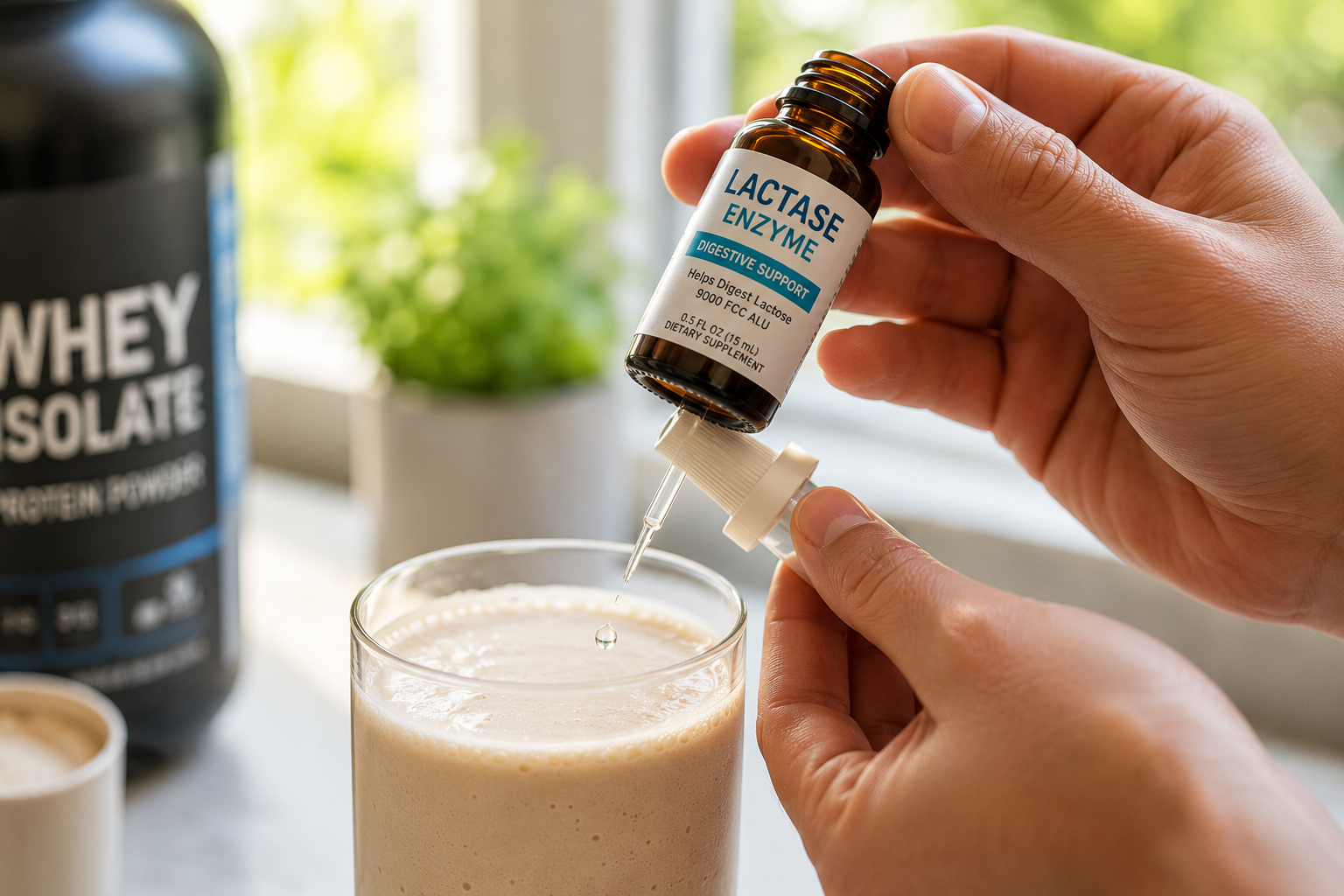
- Add lactase drops: Over-the-counter lactase enzyme can be added directly to your whey shake 5 minutes before drinking. It breaks down any residual lactose preemptively.
- Pair with probiotics: Certain Lactobacillus and Bifidobacterium strains improve overall lactose digestion when consumed regularly. Take a probiotic with your shake or choose a whey product fermented with kefir cultures.
- Mix with plant milk: Using unsweetened almond or oat milk instead of cow’s milk eliminates additional dietary lactose from the shake.
- Divide the dose: Two half-servings spaced 3–4 hours apart are often better tolerated than one large bolus.
What About Whey Hydrolysate? The Ultimate Low-Lactose Option
Whey hydrolysate is produced by treating whey protein with enzymes that break the protein into smaller peptides and simultaneously degrade any remaining lactose. The result is a product with virtually undetectable lactose levels. It is often used in medical and infant formulas precisely because of its extremely low allergenic potential. While the slightly bitter taste and higher cost may be drawbacks, for those with severe lactose intolerance who still want the rapid absorption of whey, hydrolysate is the definitive choice.
Alternatives to Whey for the Extremely Sensitive
If even isolate triggers symptoms — which is rare and may indicate a milk protein allergy rather than lactose intolerance — consider these equally effective options:
- Plant-based blends: Pea and rice protein combinations deliver a complete amino acid profile. They are entirely lactose-free.
- Egg white protein: Lactose-free, highly bioavailable, and mild in flavor.
- Collagen peptides: Not a complete protein for muscle building, but excellent for joint and skin health without any dairy.
If you experience hives, swelling, difficulty breathing, or anaphylaxis after consuming any whey product, you may have a milk protein allergy (casein or whey allergy), not lactose intolerance. Discontinue use immediately and consult an allergist. Whey isolate still contains milk proteins and is not safe for those with a true milk allergy.
Myths and Facts
Frequently Asked Questions
Can I drink whey protein if I am lactose intolerant?
Yes, you can, provided you choose a whey protein isolate or hydrolysate. These forms have had the vast majority of lactose removed and are generally well tolerated. Avoid whey concentrate entirely.
What type of whey protein is best for lactose intolerance?
Whey protein isolate is the best balance of cost, taste, and extremely low lactose content. If you are highly sensitive, try whey hydrolysate, which contains less than 0.1g of lactose per serving.
How do I know if my whey protein has lactose?
Check the nutrition label: if total carbohydrates per serving are very low (less than 1g) and sugars are near zero, lactose is minimal. Avoid products listing “whey concentrate” or “milk solids” as primary ingredients. Look for “lactose-free” certification.
Can lactase pills help with whey protein digestion?
Absolutely. Taking a lactase supplement alongside your whey isolate shake adds an extra layer of security by breaking down any residual lactose before it reaches the colon. This is a reliable, inexpensive strategy.
Is whey protein safe for someone with a severe dairy allergy?
No. Whey protein in any form still contains milk proteins. Severe dairy allergy requires strict avoidance of all milk-derived products. Consult an allergist and consider plant-based alternatives.
Expert Verdict: Whey Can Work for a Lactose-Intolerant Gut
Lactose intolerance does not mean you must abandon the muscle-building and recovery benefits of whey protein. The key is selecting the right form — ideally a microfiltered whey isolate or hydrolysate — and using simple digestive aids when necessary. Millions of athletes with lactose sensitivity use whey isolate daily without discomfort, proving that with smart choices, you can have your shake and digest it too.
Ready to find your ideal gut-friendly protein? Explore our curated list of independently tested, lactose-free whey isolates and start fueling your performance without the fear of digestive drama.
Disclaimer: This article is for informational purposes only and does not replace professional medical advice. If you suspect lactose intolerance, consult a gastroenterologist or registered dietitian for proper diagnosis and personalized dietary guidance.
References
- Suchy FJ, Brannon PM, Carpenter TO, et al. NIH consensus development conference statement: Lactose intolerance and health. Ann Intern Med. 2010;152(12):792-796.
- EFSA Panel on Dietetic Products, Nutrition and Allergies. Scientific Opinion on the safety of whey protein. EFSA Journal. 2010;8(10):1818.
- Haug A, Høstmark AT, Harstad OM. Bovine milk in human nutrition – a review. Lipids Health Dis. 2007;6:25.
- Morifuji M, Ishizaka M, Baba S, et al. Comparison of different sources and degrees of hydrolysis of dietary protein: effect on plasma amino acids and dipeptides in humans. J Agric Food Chem. 2010;58(15):8788-8797.
- Shrestha K, Shetty S. Lactose intolerance: a review for clinicians. J Clin Diagn Res. 2020;14(2):OE01-OE05.
- National Institute of Diabetes and Digestive and Kidney Diseases (NIDDK). Lactose Intolerance. NIH Publication; 2018.
Share