Starting Strength Training for the First Time in Pregnancy: Miscarriage Risk, First-Trimester Myths & Science-Backed Safe Intensity
By Artemis_strength•June 5, 2026•11 min read
Starting Strength Training for the First Time in Pregnancy: Miscarriage Risk, First-Trimester Myths & Safe Intensity
You just found out you’re pregnant, and your exercise history is minimal—perhaps a few months of inconsistent gym visits or no formal training at all. Now you’re wondering: Can I even start strength training now? Will lifting weights cause a miscarriage, especially in the delicate first trimester? These fears are understandable and deeply rooted in outdated cultural advice. But the scientific reality offers a far more empowering picture. This comprehensive, evidence-based guide unpacks the true miscarriage risk, dismantles the “don’t lift heavy in the first 3 months” myth, and provides precise, safe-start protocols for a complete beginner with less than six months of exercise experience—or even zero—who wants to strength train during pregnancy.
The First-Trimester Fear: Where Does the “Don’t Lift” Myth Come From?
For generations, pregnant women have been warned to avoid lifting anything heavier than a handbag, particularly in the first 12 weeks. This belief stems from a misinterpretation of occupational health studies that linked repetitive heavy lifting in demanding jobs (e.g., standing for hours and moving patients) to a slightly higher risk of preterm birth or low birth weight—not miscarriage. Cultural narratives then conflated any physical strain with miscarriage risk, even though early pregnancy loss is overwhelmingly caused by chromosomal abnormalities incompatible with life, not by a mother’s controlled exercise. In fact, the World Health Organization and ACOG explicitly state that moderate-intensity resistance exercise does not increase early pregnancy loss in healthy women.
Key Fact: Approximately 50–70% of first-trimester miscarriages are due to aneuploidy—genetic errors that occur at conception. Neither bed rest nor exercise avoidance can prevent these losses. Blaming a workout for a miscarriage that was already genetically determined adds unnecessary guilt and anxiety.
What the Research Says: Can Starting Strength Training After Conception Actually Trigger Miscarriage?
To date, no randomized controlled trial or large prospective cohort study has demonstrated that moderate resistance training, when appropriately prescribed and supervised, increases the risk of miscarriage in women with a low-risk pregnancy—regardless of prior training experience. Below is a summary of pivotal studies that should reassure any anxious beginner.
| Study | Population | Intervention / Observation | Outcome on Miscarriage |
|---|---|---|---|
| Madsen et al. (2007), BJOG | 92,671 Danish women | Self-reported physical activity (including strength sports) in early pregnancy | No association between any type of exercise and risk of miscarriage before 18 weeks; women who exercised had a slightly lower overall miscarriage risk. |
| Jukic et al. (2012), Epidemiology | 2,328 women planning pregnancy | Physical activity levels tracked from preconception through early gestation | Moderate and even vigorous physical activity was not linked to early pregnancy loss. High-impact activity >7 hours/week showed a slight non-significant trend, but strength training specifically was safe. |
| Clapp JF (2002), Med Sci Sports Exerc | Prospective cohort of exercising women | Weight-bearing exercise continued into early pregnancy | No increased miscarriage rate; exercising women had healthier placental growth and lower oxidative stress markers. |
| Barakat R et al. (2009), Am J Obstet Gynecol | 160 previously sedentary pregnant women | Supervised light-to-moderate resistance training 3x/week from 12–14 weeks until delivery | Zero difference in miscarriage or preterm birth rates; resistance group had better birth weight outcomes. |
| Mottola MF et al. (2018), Br J Sports Med | Systematic review for 2019 Canadian Guideline | All forms of prenatal exercise considered | Exercise did not increase miscarriage risk; women previously inactive were encouraged to start gradually. |
Pro Tip: The 2019 Canadian Guideline for Physical Activity throughout Pregnancy explicitly recommends that women who were previously inactive begin with “small amounts of moderate-intensity physical activity and gradually increase duration, frequency, and intensity.” This is a direct endorsement of starting from zero under medical clearance.
Why the First Trimester Is Not a Contraindication—but a Time for Intelligent Adaptation
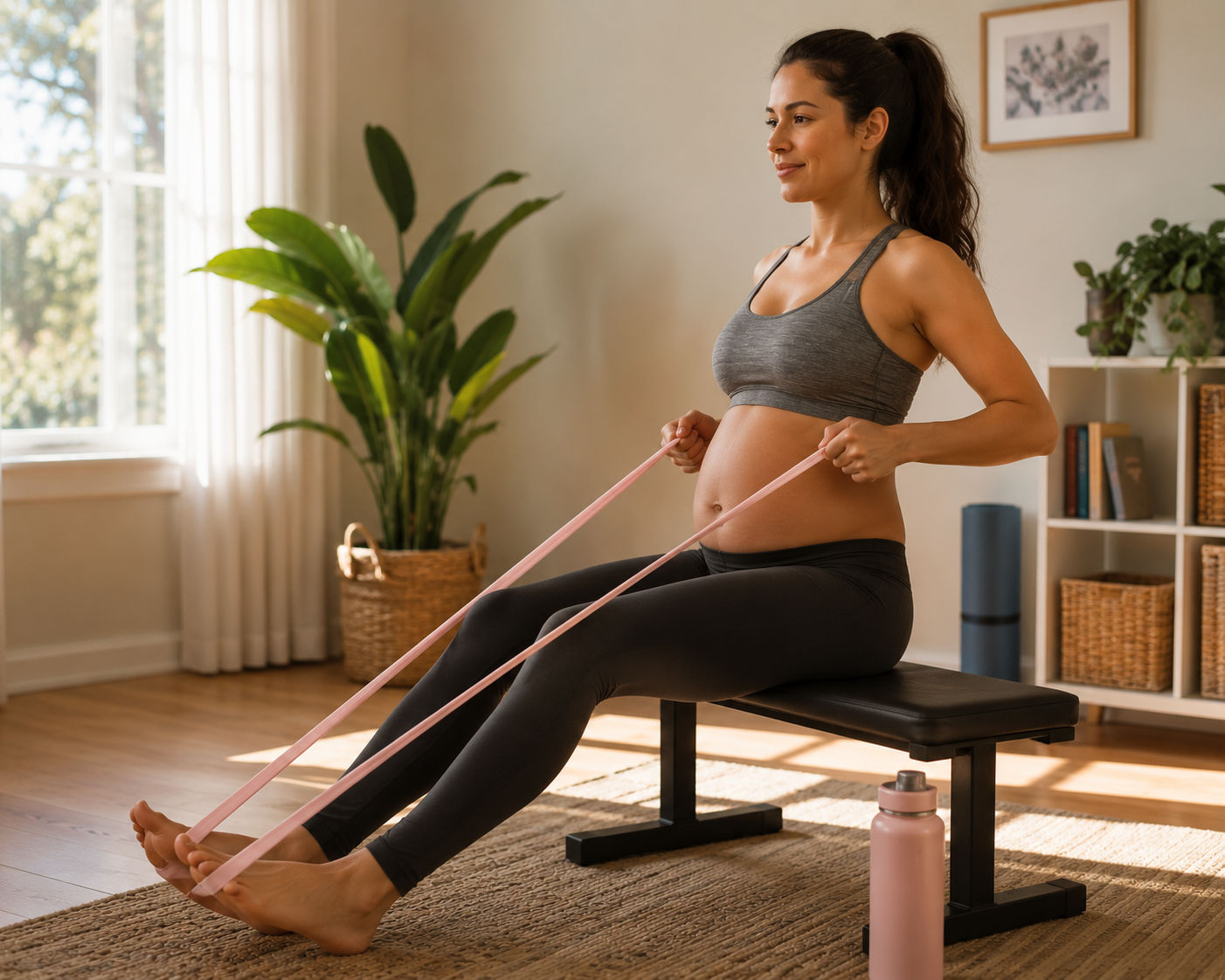
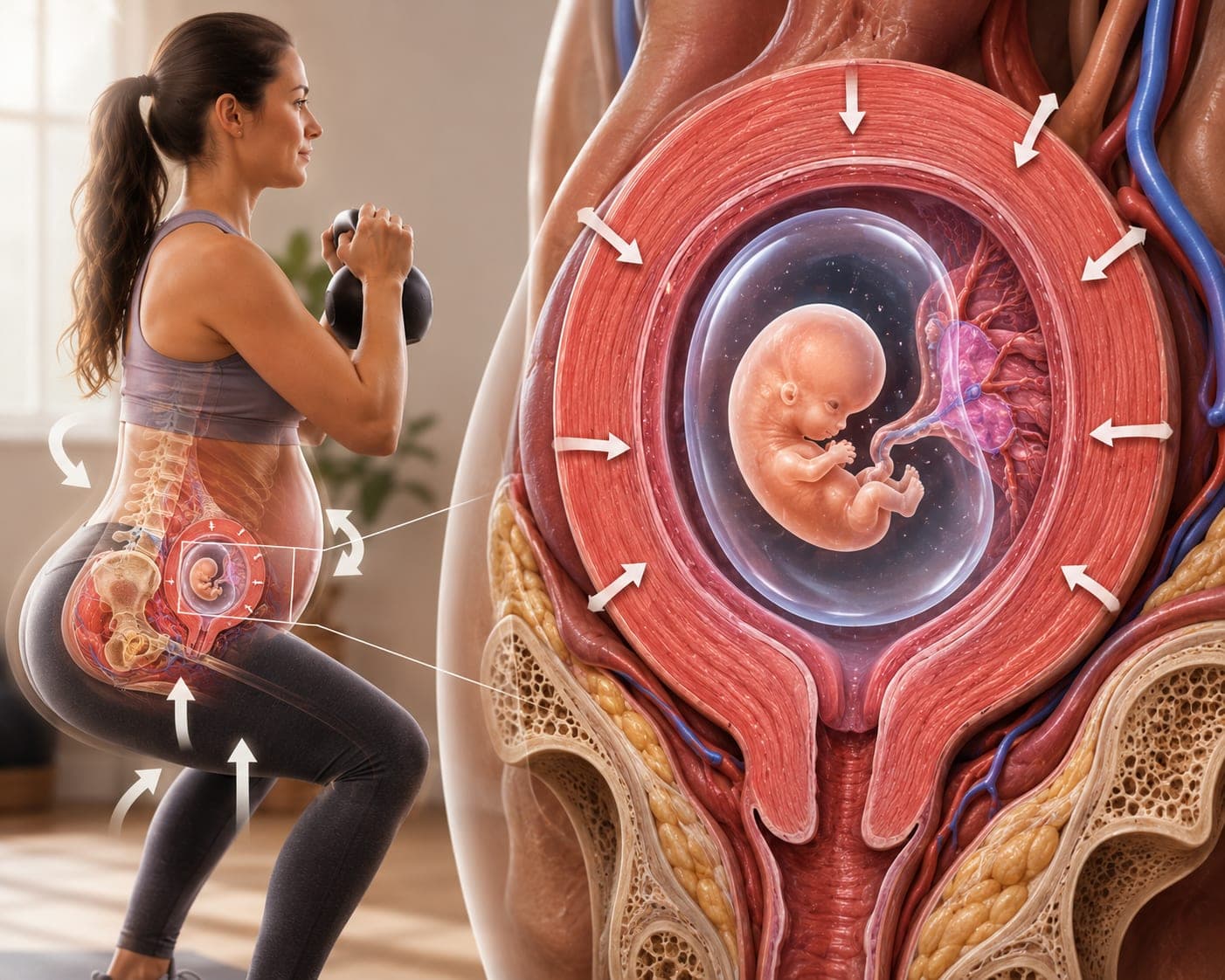
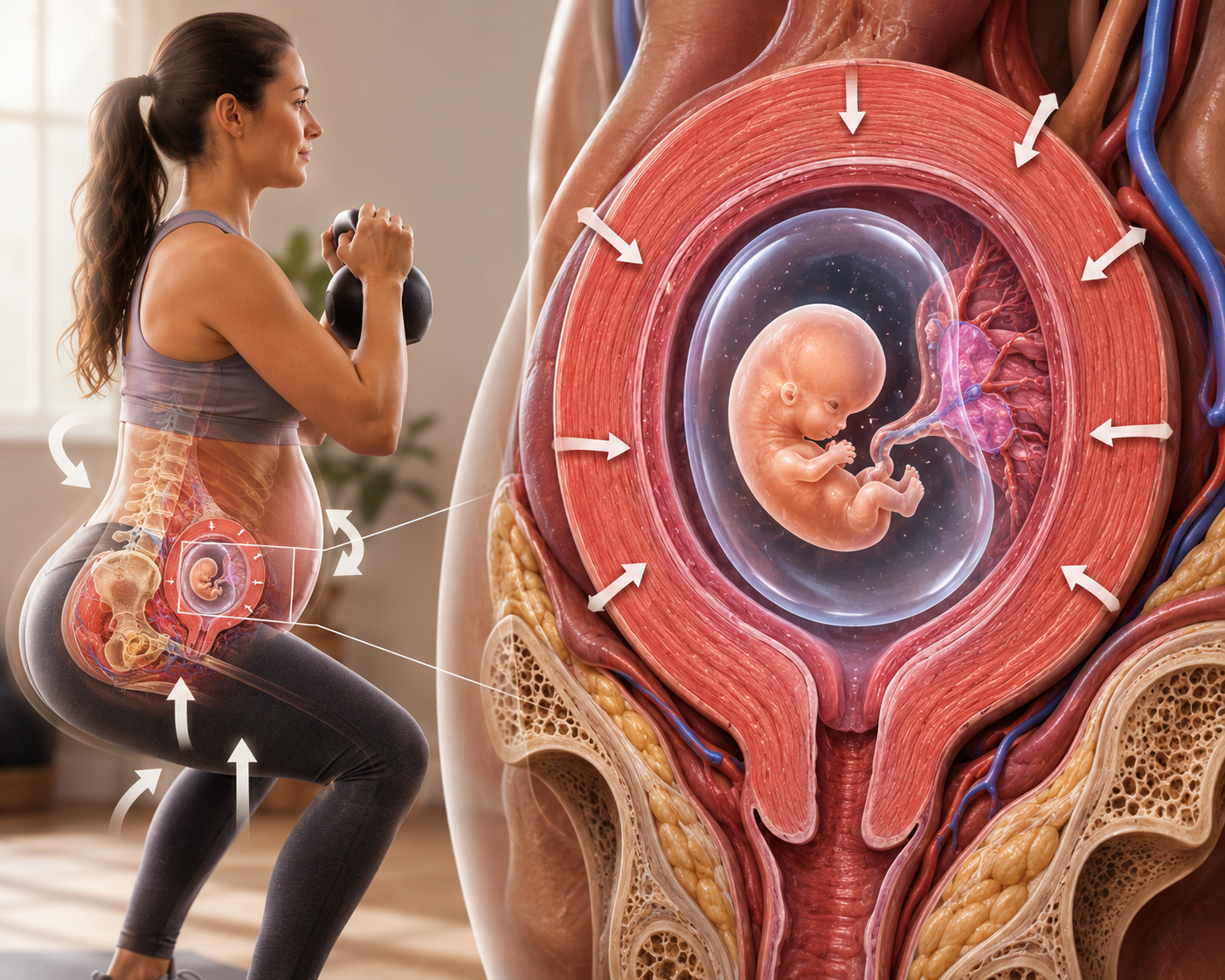
The first trimester is indeed a critical period of organogenesis, but the embryo is protected inside the bony pelvis until about 12 weeks and cushioned by amniotic fluid, the amniotic sac, and the thick uterine muscle. Gentle, controlled contractions of the mother’s skeletal muscles during a bodyweight squat or a light band row do not transmit harmful forces to the developing embryo. The real concerns in early pregnancy for the beginner are not miscarriage, but managing symptoms like nausea, fatigue, and dizziness, while avoiding overheating and excessive intra-abdominal pressure.
- Protective mechanisms: The uterus is a muscular fortress; amniotic fluid acts as a shock absorber. Even direct abdominal trauma (rare in gym settings) would need to be significant to threaten the pregnancy.
- Hormonal support: Rising progesterone relaxes smooth muscle, which is why your blood vessels dilate and you may feel lightheaded—but it does not render resistance training dangerous. It simply means you should avoid rapid changes in position and use support where needed.
- Thermoregulation: Fetal harm from hyperthermia is a concern only with prolonged core temperature above 39°C. A light strength session in a ventilated room poses no such risk.
How Hard Should a Complete Beginner or Woman with Under 6 Months of Experience Push?
With little or no training base, the body lacks the muscular and connective tissue adaptations that a seasoned lifter possesses. The focus shifts from progression to gentle conditioning. The “no more than 140 bpm” rule is obsolete; instead, use the Rate of Perceived Exertion (RPE) scale and the talk test.
| Variable | Recommendation for Beginner Pregnant Women (0–6 months experience) | Explanation |
|---|---|---|
| Frequency | 2–3 days per week, non-consecutive | Allows tissue recovery; less is more at first. |
| Intensity (RPE 1–10) | RPE 4–6 (light to somewhat hard) | You should be able to sing a few words or hold a conversation easily. If you must catch your breath mid-sentence, reduce load or reps. |
| Load (External Weight) | Bodyweight initially; progress to light dumbbells (2–8 lbs) or light bands only after 4–6 consistent weeks of comfortable bodyweight work | The goal is neuromuscular control, not muscle failure. There is no minimum weight you must lift. |
| Repetitions | 10–15 per set; 1–3 sets per exercise | Higher rep range with light load ensures form mastery and cardiovascular benefit without straining. |
| Session Duration | 20–35 minutes of actual training time, plus warm-up and cool-down | Short, focused sessions reduce fatigue and overheating risk. |
| Progression | Increase reps or sets first, then minimal weight (1–2 lbs) after full comfort with current level | Rapid loading spikes are unnecessary and raise injury potential in hyperlax joints. |
Stop Immediately If You Experience: Vaginal bleeding, painful contractions, amniotic fluid leakage, dizziness that does not resolve with rest, chest pain, sudden swelling of hands/face, or a reduction in fetal movement later on. These are not signs of “pushing too hard” as a beginner; they are red flags that warrant urgent medical evaluation.
A Safe Beginner Strength Routine for the First Trimester (After Medical Clearance)
This sample session uses only bodyweight and a light resistance band. Perform it 2–3 times per week, moving slowly and breathing continuously. Never hold your breath or bear down.
- Warm-up (5 minutes): March in place, gentle arm circles, cat-cow on all fours (spinal mobility).
- Bodyweight Box Squat: 2 x 12 reps. Use a chair or bench to tap. Keep feet hip-width, chest lifted.
- Seated Resistance Band Row: 2 x 15 reps. Anchor band around feet, pull toward lower ribs with elbows brushing sides.
- Standing Band Pull-Apart: 2 x 12 reps. Hold band at shoulder height, squeeze shoulder blades.
- Modified Glute Bridge (on mat): 2 x 12 reps. Feet flat, knees hip-width, lift hips gently. Avoid over-arching the low back.
- Side-Lying Leg Lift: 1 x 12 each side. Keeps hips strong without supine position pressure.
- Cool-down (5 minutes): Deep diaphragmatic breathing, seated pelvic tilts, gentle neck stretches.
Common Myths vs. Facts for the Anxious Beginner
“If I lift anything over 10 lbs, I’ll strain my uterus and lose the baby.”
Fact: The uterus is a powerful smooth muscle organ, not a fragile balloon. The mechanical forces from picking up a grocery bag or a light dumbbell are negligible. What matters is proper breathing and avoiding the Valsalva maneuver (forceful exhalation against a closed airway), which can transiently spike blood pressure.
“Because I’m a beginner, my body will interpret strength training as stress and trigger a miscarriage.”
Fact: Moderate physical activity actually lowers systemic inflammation and oxidative stress, creating a more favorable uterine environment. The stress hormone cortisol does rise during exercise but returns to baseline quickly, and the acute rise is not linked to miscarriage in healthy pregnancies. Chronic psychological distress has a far greater potential impact than a 20-minute band workout.
“The first 3 months are too delicate for any exercise except walking.”
Fact: Walking is excellent, but muscle-preserving resistance work is equally safe. The updated 2020 ACOG guidelines state that pregnant women without contraindications should accumulate 150 minutes of moderate-intensity aerobic and resistance exercise per week. There is no exclusion for the first trimester.
Frequently Asked Questions
I just found out I’m 6 weeks pregnant and have never exercised before. Can I really start now?
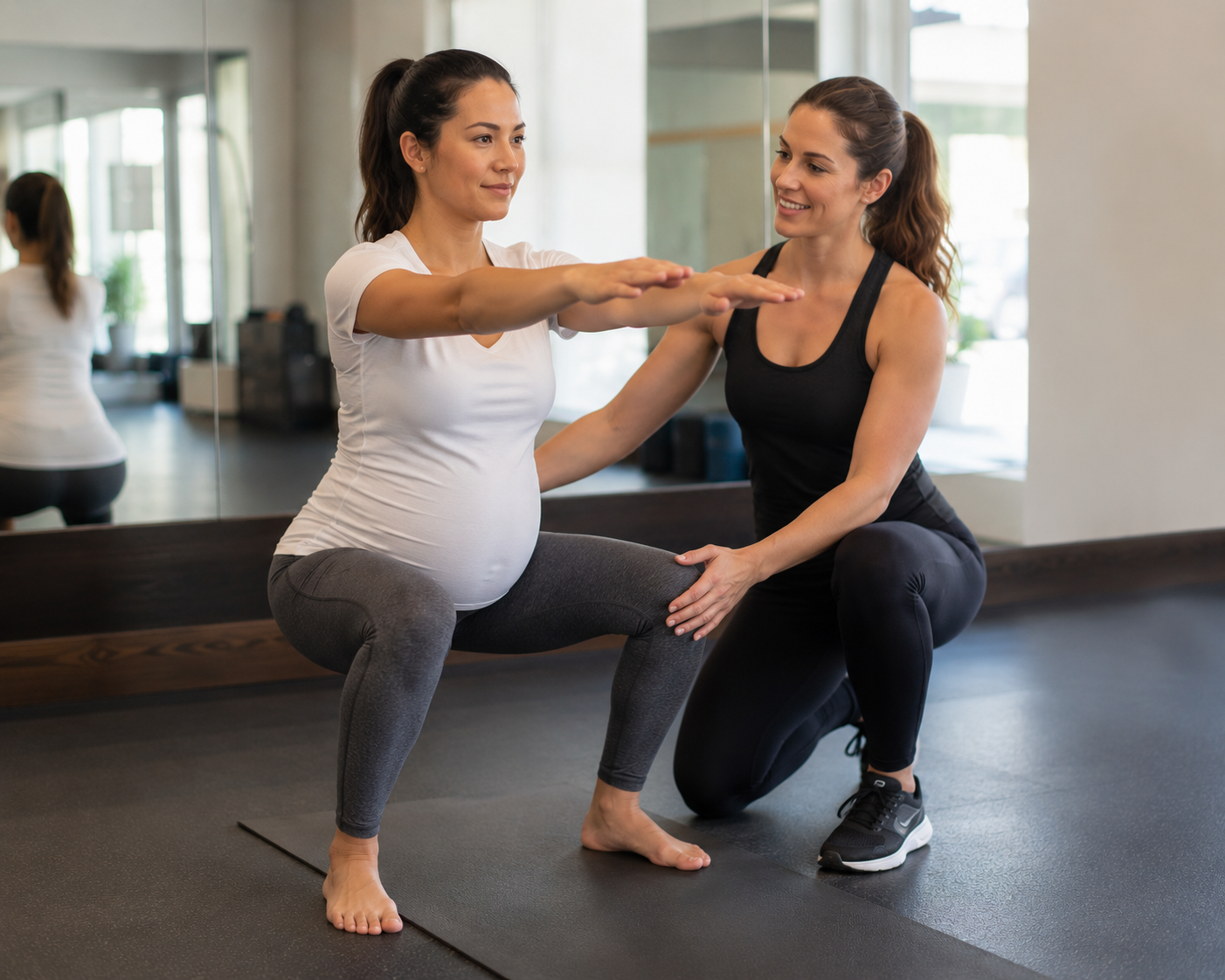
Yes, after obtaining explicit clearance from your obstetrician or midwife. Start with very gentle bodyweight movements as described, twice per week, and prioritize hydration, cool environment, and rest. An initial session under the guidance of a prenatal-certified fitness professional can set a safe foundation. The key is gradual, not dramatic, change.
Will doing squats or lifting cause the embryo to detach from the uterine wall?
No. The embryo implants deep into the uterine lining, which is richly vascularized and physically robust. Implantation failure or early detachment results from genetic, immunological, or structural uterine factors, not from the rhythmic muscle contractions of a bodyweight squat. This fear has zero biological plausibility.
I lifted something heavy before I knew I was pregnant—could that have caused a miscarriage?
Highly unlikely. Many women engage in demanding physical work or intense training before pregnancy recognition without harming their baby. If a miscarriage occurs, it is almost always due to factors beyond your control. Discuss your specific history with your provider for reassurance.
Is it safe to feel mild muscle soreness when starting out during pregnancy?
Yes. Delayed onset muscle soreness (DOMS) is a normal tissue adaptation response and does not affect the fetus. Stay hydrated, move gently to ease soreness, and avoid pain relievers like NSAIDs unless prescribed. The soreness you feel is local muscle breakdown and repair, a process far removed from the uterus.
Conclusion: You Can Begin, But Begin with Wisdom and Medical Partnership
A woman with less than six months of strength training experience—or even zero—does not need to fear that starting a gentle, properly designed resistance program will cause a miscarriage. The weight of the evidence, from large epidemiological studies to randomized controlled trials, supports safety and even benefit when intensity remains low-to-moderate and medical clearance is obtained. The ancient myth that the first trimester requires physical stillness has been replaced by a modern understanding: the pregnant body is resilient, and sensible movement is a gift to both mother and baby. If you are newly pregnant and eager to gain strength, channel your energy into learning impeccable form, listening to your body’s subtle feedback, and working with your healthcare team. Your journey into motherhood can start with empowerment, not fear.
If this article helped quiet your worries, share it with another expectant mother searching for clarity. Have more questions about your unique situation? Drop a comment below—I read every message and respond with science-grounded, compassionate advice.
Disclaimer: This article is for educational purposes only and does not constitute medical advice. Pregnancy is highly individual. Before beginning any exercise program, you must receive explicit written clearance from your obstetrician, midwife, or licensed healthcare provider. If you experience bleeding, pain, dizziness, or any abnormal symptoms, stop exercising and seek prompt medical attention.
References
- Madsen M, Jørgensen T, Jensen ML, et al. Leisure time physical exercise during pregnancy and the risk of miscarriage: a study within the Danish National Birth Cohort. BJOG. 2007;114(11):1419-1426.
- Jukic AMZ, Evenson KR, Daniels JL, et al. A prospective study of the association between physical activity and time to pregnancy. Epidemiology. 2012;23(3):433-440. (See also related analysis on activity and early pregnancy loss within the same cohort).
- Clapp JF 3rd. The effects of maternal exercise on fetal oxygenation and feto-placental growth. Med Sci Sports Exerc. 2002;34(8):1233-1239.
- Barakat R, Ruiz JR, Stirling JR, et al. Resistance exercise training during pregnancy and newborn's birth weight: a randomised controlled trial. Am J Obstet Gynecol. 2009;200(2):117.e1-117.e7.
- Mottola MF, Davenport MH, Ruchat SM, et al. 2019 Canadian guideline for physical activity throughout pregnancy. Br J Sports Med. 2018;52(21):1339-1346.
- American College of Obstetricians and Gynecologists. Committee Opinion No. 804: Physical Activity and Exercise During Pregnancy and the Postpartum Period. Obstet Gynecol. 2020;135(4):e178-e188.
- Hegaard HK, Petersson K, Hedegaard M, et al. Leisure-time physical activity in pregnancy and risk of miscarriage: a prospective cohort study. Acta Obstet Gynecol Scand. 2010;89(11):1425-1431.
Share