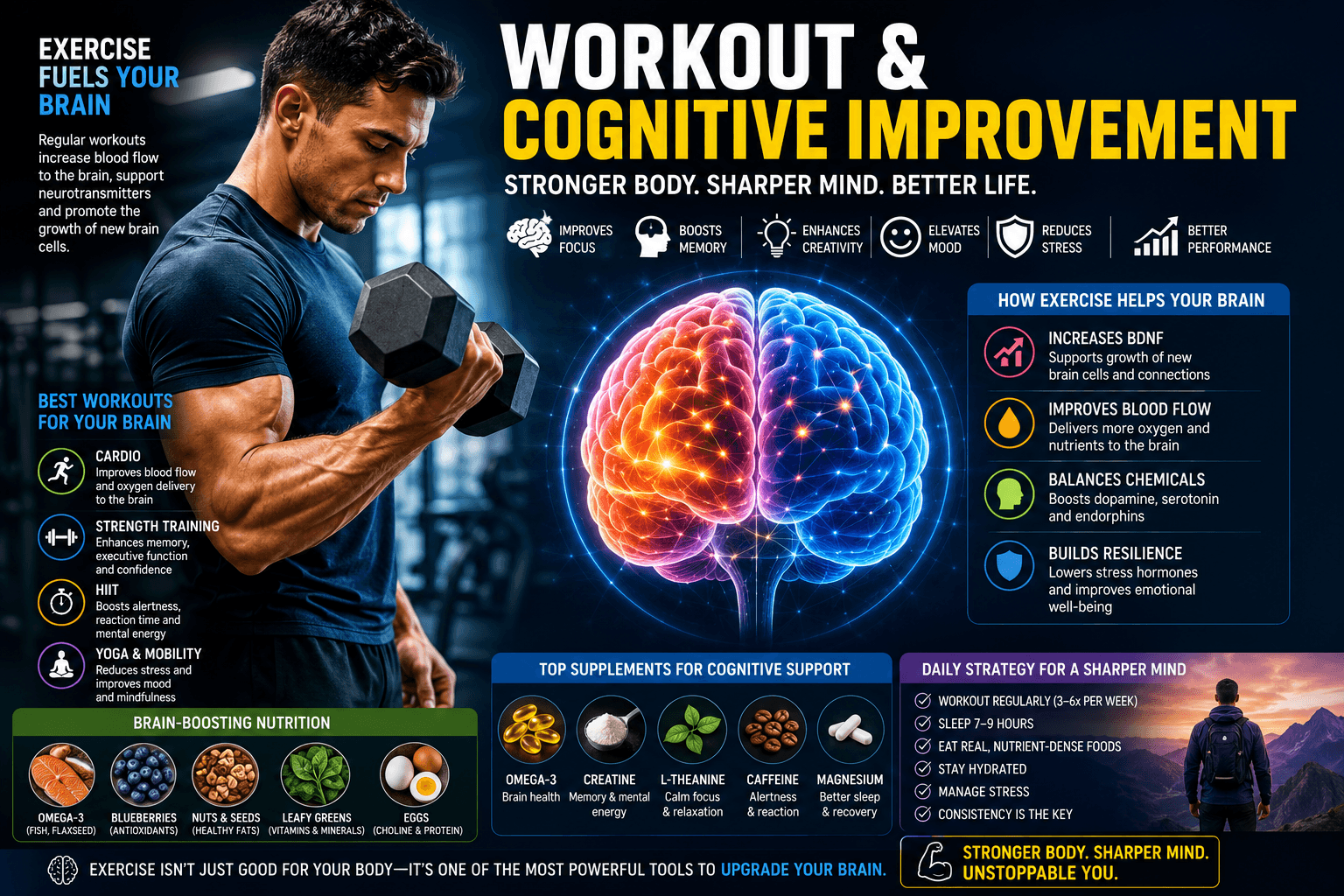
Workout and Cognitive Improvement: The Ultimate Guide to Brain Power, Focus & Mental Performance
By Artemis_strength•May 26, 2026•10 min read
Workout and Cognitive Improvement: The Ultimate Guide to Brain Power, Focus & Mental Performance
The sweating, the burning muscles, the pounding heartbeat—these are not merely signs of physical exertion. They are the loud, palpable signals of a brain under construction. For decades, the conversation around exercise centered almost exclusively on aesthetics, cardiovascular health, and physical performance. We chased visible abs and faster mile times while overlooking the most profound transformation happening silently between our ears. The truth, now supported by an avalanche of neuroscientific research, is staggering: a single workout can measurably improve your cognitive function within minutes, and consistent training physically remodels the architecture of your brain, enhancing memory, focus, creativity, and emotional resilience in ways no nootropic supplement has ever replicated. This is not motivational fluff—it is neurobiology.
As a coach who has worked with executives, artists, students, and athletes, I've witnessed the cognitive fog lift after a structured training session countless times. But the science has now caught up to the anecdote. We know the precise molecular players—BDNF, lactate, irisin, VEGF—and the specific exercise protocols that maximize their release. This guide is your masterclass in the exercise-brain connection. You will learn exactly how different workout modalities target distinct cognitive domains, the optimal intensity and duration for neuroplasticity, the nutritional cofactors that amplify the brain benefits, and how to design a weekly training schedule that builds not just a stronger body, but a faster, sharper, and more resilient mind. Whether you're a 25-year-old knowledge worker seeking laser focus or a 60-year-old concerned about long-term cognitive preservation, the program you need starts with movement.
The Neurochemical Orchestra: How One Workout Changes Your Brain Instantly
Within seconds of beginning vigorous movement, your brain becomes a chemical factory. Muscle contractions signal the release of a cascade of molecules that cross the blood-brain barrier and alter neurotransmitter balance, cerebral blood flow, and even gene expression. Understanding this immediate response reveals why you feel mentally sharper after a workout and, more importantly, how to time your training for critical mental tasks.
Three neurotransmitters rise rapidly during exercise: dopamine, norepinephrine, and serotonin. Dopamine sharpens attention and motivation, essentially telling the prefrontal cortex to lock onto a target. Norepinephrine boosts alertness and signal-to-noise ratio, making relevant stimuli more prominent and distractions easier to ignore. Serotonin modulates mood, reducing anxiety and creating a sense of calm focus rather than jittery hyperarousal. This triad explains the "post-exercise clarity" phenomenon: you've just self-administered a precisely dosed, side-effect-free cognitive enhancer. [1] Functional MRI studies show that immediately following moderate-intensity aerobic exercise, the dorsolateral prefrontal cortex—the seat of executive function and working memory—exhibits heightened activation, translating to better decision-making and problem-solving capacity for up to two hours post-workout. [2]
Performance Strategy: Schedule cognitively demanding tasks—strategic planning, complex writing, critical negotiations—within 60 minutes of finishing a moderate-intensity cardiovascular session. The neurochemical window is wide open, and the boost is real and measurable.
BDNF: The Master Molecule of Brain Growth
If the neurotransmitter surge is the immediate spark, brain-derived neurotrophic factor (BDNF) is the long-term architectural renovation. BDNF is a protein that acts like fertilizer for neurons, promoting the survival of existing brain cells, stimulating the growth of new ones (neurogenesis) in the hippocampus, and strengthening synaptic connections (neuroplasticity). John Ratey, Harvard psychiatrist and author of Spark, famously called BDNF "Miracle-Gro for the brain." Every workout session, particularly those involving high intensity or complex movement, sends a pulse of BDNF into the brain, with levels peaking approximately 30–45 minutes post-exercise. [3]
The hippocampus, a structure critical for memory consolidation and spatial navigation, is exquisitely sensitive to BDNF. It is also one of the only brain regions capable of adult neurogenesis. Longitudinal studies show that regular aerobic exercise increases hippocampal volume by about 2% per year, effectively reversing the age-related shrinkage that typically accelerates after age 40. This translates to a measurable improvement in memory performance and a reduced risk of developing Alzheimer's disease and other dementias. The molecular pathway is now well-established: skeletal muscle contraction releases irisin, which crosses the blood-brain barrier and triggers a cascade that culminates in increased BDNF expression. Your quads and glutes are literally secreting brain growth factors with every set. The implications are profound: leg day is brain day.
Cardio, Strength, or Skills: Which Workout Type Maximizes Cognitive Gains?
Not all movement is equal in the eyes of the brain. Different modalities stimulate distinct cognitive domains through unique mechanisms. The most potent approach is a periodized blend, but understanding the specific benefits allows you to program with precision.
Aerobic Exercise: The Endurance-Powered Brain Boost
Steady-state and interval-based cardiovascular training is the most extensively studied modality for cognitive enhancement. Aerobic exercise robustly increases cerebral blood flow, delivering oxygen and glucose to fuel demanding neurons. It stimulates angiogenesis—the formation of new blood vessels in the brain—and dramatically upregulates BDNF. A landmark randomized controlled trial published in the Proceedings of the National Academy of Sciences found that a 6-month aerobic walking program increased hippocampal volume in older adults by 2%, equivalent to reversing one to two years of age-related decline. [4] For memory enhancement and neuroprotection, aerobic exercise is the gold standard.
Resistance Training: The Strength-Brain Connection
Strength training's cognitive effects were long underestimated because the research focus was predominantly on aerobics. However, a growing body of evidence reveals that resistance exercise improves executive function, specifically the ability to plan, organize, and inhibit impulsive responses. A 2019 meta-analysis of 24 randomized controlled trials found that resistance training significantly improved cognitive performance, with the largest effects in executive function and memory. [5] The proposed mechanisms include increased insulin-like growth factor 1 (IGF-1), which supports neuronal survival and synaptic plasticity, and the coordination demands of complex lifts, which engage the cerebellum and motor cortex. Learning and refining a technically demanding movement like a barbell back squat is itself a cognitive task that forges new neural pathways.
High-Intensity Interval Training (HIIT): The Fast-Twitch Brain Activator
HIIT elicits a particularly potent BDNF and lactate response. Lactate, once viewed as a mere metabolic waste product, is now recognized as a crucial signaling molecule. During intense intervals, lactate produced in muscles crosses into the brain, where it serves as a preferred fuel source for neurons and directly stimulates BDNF expression. [6] A 2021 study directly compared HIIT, moderate-intensity continuous training (MICT), and resistance training; HIIT produced the largest immediate spike in serum BDNF levels. HIIT also powerfully improves cerebrovascular reactivity, meaning the brain's blood vessels become more responsive and efficient at shunting oxygen where it's needed. For those short on time, a 20-minute HIIT session delivers an exceptional cognitive stimulus.
Complex Motor Skills and Mind-Body Exercise
Sports, martial arts, dance, rock climbing, and yoga add a critical layer: cognitive challenge combined with movement. These activities demand rapid decision-making, spatial processing, proprioceptive awareness, and motor learning, activating broad neural networks including the cerebellum, basal ganglia, and prefrontal cortex simultaneously. This "motor enrichment" has been shown to enhance synaptic plasticity even more than simple repetitive movement. The cognitive demand of coordinating limbs under pressure or learning a new yoga flow creates a denser, more interconnected neural network. For overall brain resilience and processing speed, include a weekly session that challenges your coordination and motor learning—your brain will forge connections that no isolated bicep curl can match.
| Exercise Type | Primary Cognitive Domain Improved | Key Mechanism | Optimal Protocol |
|---|---|---|---|
| Aerobic (MICT) | Memory, hippocampal volume, neuroprotection | BDNF, angiogenesis, irisin | 30–60 min at 60–75% HRmax, 3–5x/week |
| Resistance Training | Executive function, inhibitory control, processing speed | IGF-1, motor learning, myokine signaling | 2–3x/week, compound lifts, moderate-heavy load |
| HIIT | BDNF release, cerebrovascular reactivity, acute focus | Lactate signaling, catecholamine surge | 15–25 min, 4–6 intervals, 85–95% HRmax |
| Complex Motor Skills | Cognitive flexibility, spatial processing, neuroplasticity | Synaptic remodeling, cerebellar activation | 1–2x/week, novel or challenging movement tasks |
The Acute Post-Workout Cognitive Window: Timing for Maximum Mental Output
The immediate cognitive benefits of exercise follow a predictable time course that, once understood, can be strategically exploited. Research consistently shows a biphasic response: an immediate post-exercise enhancement in prefrontal cortex-dependent tasks (attention, working memory, inhibition), which persists for up to two hours, followed by a potential dip if the exercise was exhaustive due to dehydration and glycogen depletion. The sweet spot is the first 60–90 minutes after a moderate-intensity session. This window represents a state of elevated cerebral blood flow, heightened catecholamine tone, and an environment primed for synaptic tagging—the process by which salient information is flagged for long-term consolidation.
Practical application: if you have a critical presentation, exam, or creative sprint, exercise before it, not after. A 20-minute bout of moderate cycling or a brisk run, followed by a quick shower and a protein-rich snack (tyrosine and other amino acids support neurotransmitter synthesis), sets the cognitive table. Avoid exhaustive, glycogen-depleting sessions before cognitively demanding tasks, as mental fatigue often accompanies profound physical fatigue due to overlapping neurobiological substrates. The goal is activation, not exhaustion. [7] Experiment with your own chronobiology: some individuals find early morning exercise unlocks a full day of heightened focus; others use a midday session to obliterate the afternoon slump. Your optimal timing is individual, but the principle is universal—motion precedes mental clarity.
Long-Term Structural Brain Changes: Building Cognitive Reserve
The cumulative effect of consistent training is not merely a transient chemical boost; it is a physical remodeling of brain tissue. The concept of "cognitive reserve" describes the brain's resilience to damage and degeneration, and exercise is the most powerful, evidence-based method to build it. Neuroimaging studies have identified several structural adaptations in long-term exercisers: increased gray matter volume in the prefrontal cortex and hippocampus, improved white matter integrity (faster and more efficient neural communication), and greater functional connectivity between brain networks. These changes provide a buffer against both normal age-related cognitive decline and pathological conditions like Alzheimer's disease. A 2019 study published in The Lancet Neurology identified physical inactivity as the single largest modifiable risk factor for dementia, accounting for a greater proportion of population-attributable risk than smoking, hypertension, or obesity. [8]
For fitness enthusiasts in their 20s and 30s, this means that the training you do today is literally building the neural architecture you will rely on in your 60s, 70s, and beyond. Like compound interest on a retirement account, early and consistent investment yields exponential returns. The mechanism involves not only BDNF-driven neurogenesis but also the maintenance of cerebral microvasculature—the tiny blood vessels that supply neurons. Aerobic exercise prevents the age-related rarefaction of these vessels, ensuring that the brain remains adequately perfused. Resistance training adds metabolic resilience by improving insulin sensitivity, as the brain is increasingly recognized to be vulnerable to insulin resistance ("type 3 diabetes"), which is implicated in Alzheimer's pathogenesis. Your training split is, in a very real sense, your cognitive longevity plan.
Nutritional Co-Factors: Fueling the Brain-Body Connection
You cannot build a brain on movement alone. The raw materials for neurotransmitter synthesis, myelin formation, and BDNF signaling come from your diet. For the fitness-focused individual seeking cognitive enhancement, the following nutritional strategies amplify the brain-boosting effects of exercise.
Omega-3 Fatty Acids: The Neural Membrane Foundation
Docosahexaenoic acid (DHA), an omega-3 fatty acid found in fatty fish and algae oil, is the primary structural fat in the human brain, comprising up to 30% of the gray matter. DHA enhances synaptic plasticity, reduces neuroinflammation, and has been shown to synergize with exercise to increase BDNF expression. A study in Neuroscience demonstrated that rats fed a DHA-supplemented diet and allowed to exercise showed significantly greater BDNF upregulation than either intervention alone. [9] For humans, a daily intake of 1–3 g of combined EPA and DHA from high-quality fish oil or algal oil supports the structural foundation upon which exercise-induced neuroplasticity is built. This is especially critical for athletes on plant-based diets, who must seek out algal DHA supplements, as the conversion of plant ALA to DHA is minimal.
Polyphenols and Flavonoids: The Cerebral Circulation Optimizers
Berries, cocoa, green tea, and coffee contain polyphenolic compounds that cross the blood-brain barrier and exert neuroprotective effects. Cocoa flavanols, in particular, acutely enhance cerebral blood flow and improve performance on cognitively demanding tasks, as shown in a 2021 randomized trial. [10] Green tea's combination of L-theanine and a modest dose of caffeine creates a state of "calm alertness" ideal for focused work, synergizing with the post-exercise catecholamine environment. A practical pre-workout or post-workout strategy: pair your training with a cup of green tea or a small portion of dark chocolate (85%+ cocoa). The modest caffeine dose enhances focus without overstimulation, and the flavanols support vascular function, amplifying exercise's own vasodilatory effect on cerebral arteries.
Creatine: Not Just for Muscle
Creatine monohydrate, the most well-studied sports supplement for physical performance, is increasingly recognized as a cognitive enhancer. The brain is metabolically voracious, consuming about 20% of the body's energy despite being only 2% of its mass. Creatine increases phosphocreatine stores, providing a rapid ATP buffer during periods of high neural demand. This translates to improved short-term memory, mental fatigue resistance, and processing speed, particularly under conditions of sleep deprivation or high cognitive load. A 2018 systematic review concluded that creatine supplementation, particularly in vegetarians (who have lower baseline levels), reliably improves cognitive performance. At the standard 5 g daily dose, creatine is a safe, cheap, and evidence-based addition to any brain-body protocol.
Brain Fuel Tip: On days when you combine physical and cognitive training—say, a morning workout followed by an intensive work project—consume a post-exercise meal rich in protein (for neurotransmitter precursors), omega-3s (for synaptic support), and slow-digesting carbohydrates (for steady brain glucose). A wild salmon salad with quinoa, spinach, and blueberries is the archetypal brain-body meal.
Designing the Ultimate Brain-Body Weekly Training Split
Integration is the final piece. A haphazard mix of workouts will produce haphazard cognitive results. The optimal weekly schedule strategically layers modalities to provide both acute focus boosts and the chronic structural adaptations that build cognitive reserve. Below is a template designed for the individual seeking peak physical and mental performance. It assumes a baseline level of fitness; adjust load, intensity, and duration to your current capacity.
| Day | Workout | Primary Cognitive Mechanism | Duration / Intensity |
|---|---|---|---|
| Monday | Resistance Training (Full Body, Compound Focus) | IGF-1, executive function, motor cortex engagement | 60 min, 70–85% 1RM |
| Tuesday | Aerobic (MICT) + Cognitive Task Post-Workout | BDNF, hippocampal blood flow, acute focus window | 40 min at 65–75% HRmax |
| Wednesday | HIIT (Cycling, Rowing, or Sprint Intervals) | Lactate-BDNF surge, cerebrovascular reactivity | 20–25 min, 4–6 intervals at 90% max |
| Thursday | Resistance Training (Upper/Lower Split) | Sustained IGF-1, discipline and inhibition control | 60 min, 70–85% 1RM |
| Friday | Complex Motor Skills (Martial Arts, Dance, Climbing, Yoga) | Cognitive flexibility, spatial processing, novelty | 45–60 min, moderate intensity |
| Saturday | Long Aerobic (Trail Run, Hike, Cycling) Outdoors | Sustained BDNF, nature exposure benefits, stress reduction | 60–90 min at 60–70% HRmax, outdoors |
| Sunday | Active Recovery (Walking, Light Yoga, Mobility) | Parasympathetic activation, consolidation, tissue repair | 30–45 min, very low intensity |
This split is not arbitrary. It alternates high-intensity neural stimulation with lower-intensity consolidation days, ensures each cognitive mechanism is targeted at least once per week, and integrates the outdoors on the weekend—nature exposure independently reduces rumination, lowers cortisol, and enhances creative problem-solving. The Friday session is a deliberate "neuroplasticity injection" through motor novelty. Feel free to shift days to align with your schedule, but maintain the pattern of variety. Monotony is the enemy of both physical and cognitive adaptation.
Sleep: The Non-Negotiable Consolidation Phase
No discussion of exercise and cognition is complete without addressing sleep. BDNF secretion, memory consolidation, glymphatic clearance (the brain's waste removal system), and muscle repair all peak during deep slow-wave sleep. If you train intensely but sleep poorly, you are essentially manufacturing neuroplasticity signals that you never allow to be physically installed. The workout is the instruction to remodel; sleep is the actual renovation. A single night of poor sleep significantly blunts the post-exercise BDNF response the following day, meaning your workouts lose their cognitive potency. [11] Protect 7–9 hours of quality sleep as fiercely as you protect your training sessions. This includes sleep hygiene fundamentals: consistent bed and wake times, a dark and cool room, and no screens 60 minutes before bed. Magnesium glycinate at 200–400 mg before bed can deepen sleep, supporting the very brain adaptations you trained to stimulate.
Overtraining Alert: Chronic overreaching without adequate recovery produces sustained elevations in cortisol, which is neurotoxic to the hippocampus. The same hippocampus you're trying to grow with BDNF can be damaged by excessive cortisol. Monitor your resting heart rate, sleep quality, and motivation. If you feel chronically flat, irritable, and mentally foggy, you may have crossed from productive training into overtraining syndrome, which impairs cognition rather than enhancing it. A deload week is not weakness; it is neural preservation.
Myths That Cloud the Brain-Fitness Connection
Myth 1: "Only Long Cardio Matters for the Brain"
The historical research focus on aerobic exercise created the impression that only steady-state running or cycling benefits the brain. This is false. Resistance training demonstrably improves executive function and protects against cognitive decline. HIIT produces the largest acute BDNF spikes. Mind-body practices enhance cognitive flexibility. The brain thrives on variety. A well-rounded program that includes strength, intervals, and motor skill challenges provides a broader spectrum of neural benefits than any single modality.
Myth 2: "Brain Training Apps Are Better Than Physical Exercise"
The multi-billion-dollar brain training industry capitalized on a simple truth: the brain needs stimulation. But the claim that isolated cognitive games translate meaningfully to real-world function has been largely debunked by rigorous studies. A 2017 consensus statement from leading neuroscientists concluded that no evidence supports the claim that brain training games yield broad cognitive benefits. [12] In contrast, the evidence for exercise-induced cognitive improvement is robust, consistent, and mechanistically understood. If you have limited time and must choose between a brain training app and a workout, choose the workout every single time. You'll get a cardiovascular, metabolic, and neurobiological benefit that no screen-based puzzle can deliver.
Myth 3: "Cognitive Decline Is Inevitable With Age"
While some degree of cognitive change is statistically common, it is not biologically inevitable. The concept of "successful cognitive aging" is well-documented, and physical exercise is the most powerful predictor of maintaining cognitive function into advanced age. The Finnish Geriatric Intervention Study (FINGER), a landmark randomized controlled trial, demonstrated that a multidomain intervention including physical exercise, nutritional guidance, and cognitive stimulation prevented cognitive decline in at-risk older adults. [13] Exercise was the cornerstone. Your habits at 30 predict your brain at 70. It is never too early, or too late, to start.
FAQ: Your Brain-Body Training Questions Answered
What is the minimum effective dose of exercise for cognitive benefits?
Even a single 10-minute bout of moderate-intensity exercise improves attention and reaction time acutely. For sustained structural benefits, the consensus from the literature points to at least 150 minutes of moderate-intensity aerobic exercise per week, plus two resistance training sessions. This aligns with general physical health guidelines, which is an elegant overlap: what's good for the heart is, metabolically and vascularly, good for the brain.
Can I use a pre-workout supplement to enhance the cognitive boost?
Some pre-workout ingredients, notably caffeine and L-theanine, have independent cognitive-enhancing effects. Combining a moderate dose of caffeine (100–200 mg) with your pre-workout snack may amplify the acute focus and attention boost from exercise. However, avoid excessive stimulants that cause jitteriness and crash; the goal is a sustainable, functional focus state, not overstimulation. Be mindful of timing—caffeine late in the day can disrupt the sleep that is essential for consolidating exercise's neural benefits.
Is outdoor exercise superior to indoor for brain health?
There is compelling evidence that exercising in natural environments amplifies the cognitive and psychological benefits. A 2023 systematic review found that outdoor exercise, compared to indoor, produces greater improvements in attention, mood, and feelings of revitalization, while lowering perceived exertion. [14] The mechanisms include exposure to fractal patterns in nature that are visually restorative, higher vitamin D synthesis from sunlight, and reduced rumination as measured by decreased subgenual prefrontal cortex activity. If you can take one or two of your weekly sessions outside—even if it's just bodyweight training in a park—you'll capture an additional layer of cognitive benefit that fluorescent-lit gyms cannot provide.
How do hormonal fluctuations affect the exercise-cognition relationship in women?
The neurochemical response to exercise is modulated by the menstrual cycle. During the follicular phase, when estrogen is rising, BDNF response to exercise may be enhanced, as estrogen and BDNF share signaling pathways. During the luteal phase, higher progesterone can blunt the catecholamine response somewhat. Additionally, perimenopause and postmenopause represent periods of increased cognitive vulnerability, and exercise becomes even more critical. Women in perimenopause should prioritize consistent, varied training, as the neuroprotective effects of exercise partially buffer against the cognitive effects of declining estrogen. This is an area of active research, but the prescription remains clear: train through all life stages, adjusting intensity based on energy and recovery, not cognitive symptoms that exercise itself can alleviate.
Conclusion: Sweat is the Ultimate Nootropic
The fitness industry has sold you the dream of a better body for far too long without emphasizing the better brain that comes with it, free of charge. Every rep, every stride, every breathless interval is a deposit not just into your physical health account, but into your cognitive future. You now understand the molecular cascade—BDNF fertilizing your hippocampus, lactate signaling neuroplasticity, the catecholamines sharpening your focus—and you possess the protocols to harness it intentionally. The question is no longer whether exercise improves cognition; it is how you will program your week to capitalize on the most powerful, side-effect-free cognitive enhancer ever discovered.
Stand up. Right now, or after finishing this sentence, perform 20 bodyweight squats or walk briskly for five minutes. Notice the subtle shift—the slight clearing, the gentle lift in alertness. That is your brain remodeling itself in real time. Multiply that by consistent, varied, and progressively overloaded training, and you have a lifelong prescription for mental sharpness, emotional stability, and cognitive resilience. Build your body, and you build your mind. They are not separate projects; they are the same magnificent system, designed to move, think, and thrive together. Now go train—your neurons are waiting for the signal.
References
- Basso, J. C. & Suzuki, W. A. "The Effects of Acute Exercise on Mood, Cognition, Neurophysiology, and Neurochemical Pathways: A Review." Brain Plasticity (2017).
- Yanagisawa, H. et al. "Acute moderate exercise elicits increased dorsolateral prefrontal activation and improves cognitive performance with Stroop test." NeuroImage (2010).
- Sleiman, S. F. et al. "Exercise promotes the expression of brain derived neurotrophic factor (BDNF) through the action of the ketone body β-hydroxybutyrate." eLife (2016).
- Erickson, K. I. et al. "Exercise training increases size of hippocampus and improves memory." Proceedings of the National Academy of Sciences (2011).
- Landrigan, J. F. et al. "Lifting cognition: a meta-analysis of the effect of resistance exercise on cognition." Psychological Research (2020).
- Schiffer, T. et al. "Lactate infusion at rest increases BDNF blood concentration in humans." Neuroscience Letters (2011).
- Chang, Y. K. et al. "The effects of acute exercise on cognitive performance: A meta-analysis." Brain Research (2012).
- Livingston, G. et al. "Dementia prevention, intervention, and care: 2020 report of the Lancet Commission." The Lancet (2020).
- Wu, A. et al. "The salutary effects of DHA dietary supplementation on cognition, neuroplasticity, and membrane homeostasis after brain trauma." Journal of Neurotrauma (2011).
- Gratton, G. et al. "Dietary flavanols improve cerebral cortical oxygenation and cognition in healthy adults." Scientific Reports (2020).
- Schmitt, K. et al. "BDNF in sleep, insomnia, and sleep deprivation." Annals of Medicine (2016).
- Simons, D. J. et al. "Do 'Brain-Training' Programs Work?" Psychological Science in the Public Interest (2016).
- Ngandu, T. et al. "A 2 year multidomain intervention of diet, exercise, cognitive training, and vascular risk monitoring versus control to prevent cognitive decline in at-risk elderly people (FINGER): a randomised controlled trial." The Lancet (2015).
- Lahart, I. et al. "The effects of green exercise on physical and mental wellbeing: A systematic review." International Journal of Environmental Research and Public Health (2019).
Share